
Energy Renovation and Property Purchase in Switzerland: The Strategic Guide
Buying an energy-inefficient property to renovate it? It may be one of the best ways to increase the value of your assets while drastically reducing your energy costs.
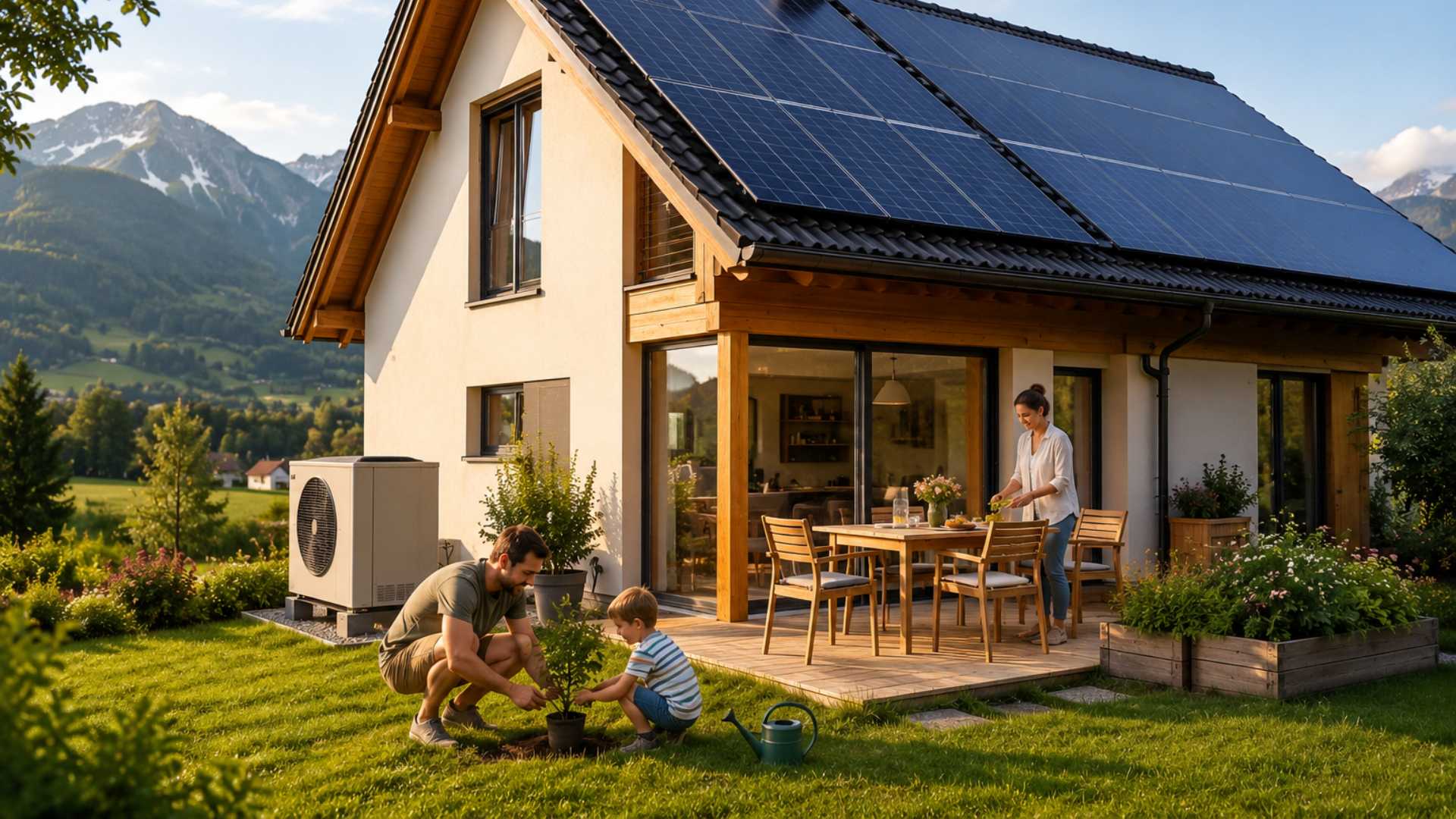
Investing in an energy-efficient renovation when purchasing property in Switzerland offers many advantages, provided that you gather the necessary information beforehand:
-
A property with an excellent Cantonal Energy Certificate for Buildings (CECB) achieves a higher resale price and sells more quickly, avoiding the "energy discount" that typically affects energy-inefficient buildings.
-
Thanks to cantonal subsidies under the Building Programme and tax deductions for renovation work, a significant share of the investment can be financed by the cantons and the Swiss Confederation.
-
Improving the building envelope and switching to renewable energy sources reduces your dependence on volatile gas and heating oil prices while increasing your comfort and quality of life.
Why has energy efficiency become the number one criterion in Switzerland?
Driven by the Energy Strategy 2050, the Swiss Confederation is accelerating the transition towards carbon-neutral buildings. Today, overlooking a property's energy performance represents a significant financial risk for any buyer.
The Cantonal Energy Certificate for Buildings (CECB)
The CECB is the reference tool for assessing the energy performance of a property.
As Switzerland's official energy label, it evaluates both the building envelope and the technical systems on a scale ranging from A (excellent energy performance) to G (very poor energy performance).
CECB Plus
The CECB Plus is much more than a simple energy assessment and has become an essential document during a real estate transaction. It provides three renovation scenarios designed to optimise the property's value.
Furthermore, it is often required to obtain cantonal and federal subsidies. It also helps buyers anticipate future investments and avoid costly surprises after purchasing the property.
For this reason, do not rely solely on the energy rating. Ask the seller to provide a CECB Plus report so that you can determine whether the property is truly worth purchasing.
Energy renovation after purchasing a property: how does it work?
Insulating the building envelope
When purchasing an energy-inefficient property, the first priority is to minimise heat losses throughout the building:
-
The roof: It accounts for up to 30% of a building's heat loss.
-
The façades: High-performance external insulation helps maintain a stable indoor temperature throughout the year while protecting the building structure.
-
The windows: Triple glazing has become the standard solution for achieving outstanding thermal and acoustic insulation.
Replacing the heating system
Once the building has been properly insulated and made airtight, the new heating system can be accurately sized. Three main options are available:
-
Heat pump (HP): Whether air-to-water or geothermal, heat pumps are considered the benchmark technology thanks to their outstanding energy efficiency.
-
Wood or pellet heating: A renewable solution particularly well suited to rural areas and traditional buildings.
-
District heating: Where available, district heating provides a turnkey, low-maintenance solution connected to the local heating network.
Installing photovoltaic solar panels
Generating electricity on-site completes the renovation process. By installing solar panels, you can directly power your two largest energy consumers:
-
Your heating system (heat pump).
-
Your mobility (electric vehicle, if you own one).
Switching to electricity offers several important advantages:
-
You reduce your exposure to fluctuations in electricity prices.
-
You maximise your self-consumption by using every kilowatt-hour you generate.
-
The resulting energy savings shorten the overall payback period of your renovation investment.
Financing and subsidies for energy renovation: how can you reduce the cost?
In Switzerland, energy renovation projects are strongly supported by public authorities. However, the amount of financial assistance you receive largely depends on how well you plan ahead.
The Building Programme and cantonal subsidies
Each canton manages its own funding programme, but the principle remains the same: the greater the energy savings achieved, the higher the subsidy. Financial support mainly covers:
-
The building envelope: Subsidies are calculated per square metre of insulated surface. To qualify, the renovation must achieve a very low U-value, often exceeding the minimum legal requirements.
-
Heating replacement: Replacing an oil-fired boiler with a heat pump may qualify for grants ranging from CHF 2,000 to more than CHF 15,000.
-
Comprehensive renovation bonuses: If the building reaches a recognised standard such as Minergie, many cantons offer additional financial bonuses on top of the standard subsidies.
Tax incentives
This is often where homeowners can achieve the greatest financial savings, even if the benefits are spread over several years. In Switzerland, all renovation work aimed at improving energy efficiency is generally 100% tax-deductible from taxable income.
In addition, federal tax legislation now allows energy renovation expenses to be carried forward over three consecutive tax years. This enables homeowners to reduce their tax burden over several years when renovation costs exceed their annual taxable income.
Green mortgages
Swiss banks also contribute to the energy transition by offering dedicated financing solutions:
-
Preferential interest rates: Reduced mortgage rates—often during the first five years—for properties certified with a CECB or Minergie label.
-
Higher collateral value: An energy-renovated home generally has a higher market value, providing greater security for the bank and facilitating financing.
Purchasing strategy: buy a renovated property or one that needs renovation?
Buying a property that requires renovation can be an excellent opportunity to generate capital gains upon resale or to create a primary residence tailored entirely to your needs.
The key advantages of buying a property that requires renovation
Choosing an older property in need of renovation offers structural and financial benefits that are rarely available when purchasing a new-build home:
-
Purchase discount: You buy below the market price of comparable new or already renovated properties, maximising your potential capital gain from the outset.
-
Customisation and quality: From thermal insulation to the choice of finishes, you retain full control over the renovation specifications and the selection of contractors.
-
Tax optimisation: Renovation expenses are often tax-deductible, allowing you to significantly reduce your tax burden at the appropriate time.
The keys to a profitable investment
To ensure that your investment is financially sound, your overall budget should follow one simple golden rule:
- Purchase price + Renovation costs < Property value after renovation
In other words, the total amount invested should never exceed the property's expected market value once the renovation has been completed.
FAQ
Is it mandatory to renovate a property after purchasing it?
No. There is currently no federal obligation to renovate a property immediately after purchase. However, some cantons have introduced restrictions on renting the least energy-efficient buildings or require fossil-fuel heating systems reaching the end of their life to be replaced with renewable energy solutions.
How much does a complete energy renovation cost?
The budget varies considerably depending on the size and initial condition of the property. For a detached house, a comprehensive renovation (building envelope and technical systems) typically costs between CHF 150,000 and CHF 300,000. Subsidies and tax savings may cover 15% to 30% of these costs.
Can I obtain a mortgage to finance the renovation?
Yes. Swiss banks increasingly offer green mortgages with preferential interest rates to finance energy renovation projects. Applicants generally need to provide detailed quotations and, ideally, a CECB Plus report.
How long does it take to obtain subsidies?
Applications must be submitted before any work begins. Depending on the canton, approval usually takes between four and twelve weeks.
Is the Minergie label essential?
Not essential, but strongly recommended. It guarantees a higher construction standard and generally increases the property's resale value. In addition, many cantons offer higher subsidies when a building meets the Minergie standard.