
Everything You Need to Know About Building Lease Rights (DDP): Rules, Advantages and Advice
With a building lease right, you do not purchase the land, but rather the right to dispose of the building (sell, mortgage or transfer it) like a traditional property.
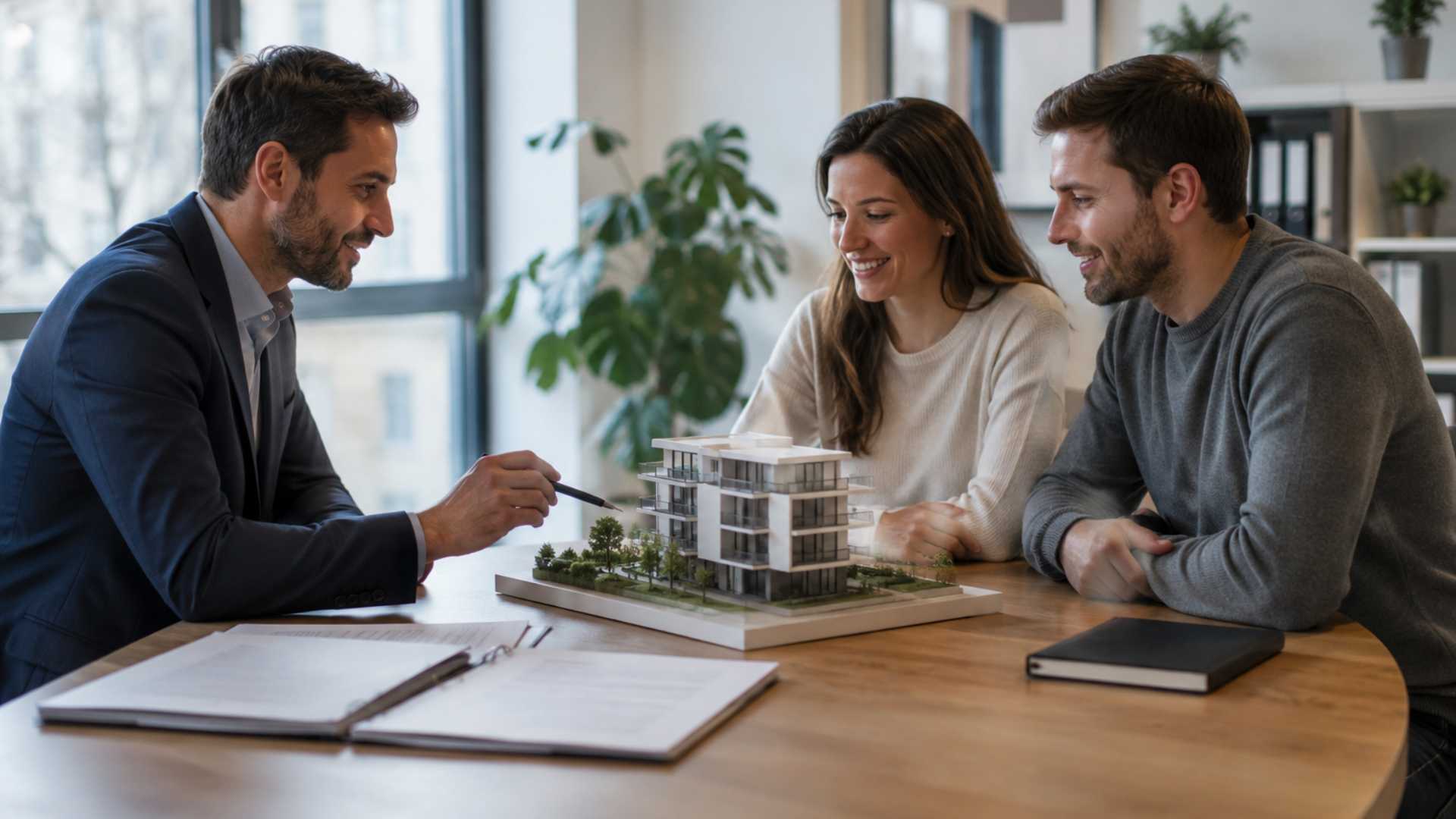
In Switzerland, the building lease right (DDP) allows individuals to become owners of a property without owning the land on which it is built :
- The DDP grants full ownership of the buildings for a fixed period, generally ranging from 30 to 100 years.
- Often offered by public authorities or institutions, this arrangement involves the payment of an annual fee in exchange for the use of the land.
- It therefore represents an interesting alternative to full ownership, particularly in areas where land is scarce or very expensive.
What is the building lease right (DDP) ?
The building lease right is an easement allowing a person (the leaseholder) to build or own a building on land belonging to another party (the grantor).
Under Swiss law, the owner of a plot of land also owns everything built upon it. The building lease right constitutes the sole exception to this rule.
In addition, you are the full owner of your house or apartment, but you rent the land on which it stands. In exchange for this right of occupation, you pay a periodic fee called a ground rent.
How does the building lease right work ?
The functioning of the DDP is based on a strict contractual framework defining the rights and obligations of each party over several decades.
The creation of the right
For a building lease right to be valid and financeable by a bank, it must be established as a distinct and permanent right :
- Distinct : it can be sold, inherited or mortgaged independently from the land.
- Permanent : its duration must be at least 30 years (and a maximum of 100 years, renewable).
It should be noted that the creation of a DDP necessarily requires a notarized deed and registration in the Land Register.
The ground rent
Its amount is generally indexed to the Swiss Consumer Price Index (CPI) or linked to the reference mortgage rate (fixed, SARON).
It is paid quarterly or annually and constitutes a fixed expense that must be integrated into your monthly budget, just like mortgage interest.
Expiry of the right and reversion compensation
At the end of the contract, if it is not extended, the buildings revert to the landowner. This is known as reversion. However, the landowner must pay the leaseholder fair compensation for the remaining value of the buildings.
Why buy under a building lease right in Switzerland ?
Beware of shortcuts : speaking of buying land under a DDP is legally inaccurate. The purchaser invests in a specific real estate right, with its own rules, advantages and constraints, particularly at the end of the contract.
A significantly lower acquisition price
By not purchasing the land, which often represents 30% to 50% of the total value of a real estate project, you massively reduce your equity requirements. If you are a large family or a first-time buyer household, this solution may allow you to become a homeowner more easily.
Sometimes more advantageous taxation
Although you pay a ground rent, this fee may, in certain cantons and depending on professional circumstances, be deducted from taxable income if the property is used commercially or under specific conditions.
Furthermore, the taxable value of your property is lower since you do not own the land, which may reduce your wealth tax.
Access to prime locations
In many cases, land under DDP belongs to public authorities or foundations (such as the Fondation de famille Sandoz or municipalities in Geneva and Vaud).
These plots are ideally located in city centres or highly sought-after residential areas where no land is available for sale anymore. The DDP then becomes the only gateway to living in these neighbourhoods.
What pitfalls should be avoided when purchasing under a DDP ?
Despite its advantages, purchasing under a building lease right requires careful attention to certain points.
An overly aggressive rent indexation clause
First of all, the method used to calculate the evolution of your ground rent is crucial for your financial stability. Make sure the indexation is capped or linked to a stable indicator.
Indeed, a poorly drafted clause could result in your rent doubling over 20 years, making the property difficult to afford or resell.
The complexity of bank financing
Not all banks finance DDP properties in the same way.
On the one hand, they may require the remaining duration of the building lease right to exceed the amortization period of the loan (at least 30 to 40 years remaining).
On the other hand, some banks apply a discount to the collateral value, which may limit the amount of the loan granted.
Conditions of the reversion compensation
Be careful : if the reversion compensation is set too low (for example 70% of the market value or less), you may lose a significant part of your assets at the end of the contract.
Therefore, it is preferable to aim for compensation between 80% and 100% of the actual value at the time of reversion in order to protect your heirs or your investment.
FAQ : Everything you need to know about the DDP in Switzerland
Can a house under a building lease right be sold ?
The DDP is a transferable right, meaning that you may sell your house at any time. The buyer will simply take over the lease agreement under the same conditions and with the same expiry date.
What happens if I want to renovate my house ?
As the leaseholder, you own the building itself. You have the right to maintain and renovate your property. However, for major structural modifications or extensions, the DDP contract often requires prior approval from the landowner.
Is the ground rent fixed ?
The ground rent is generally revised every 5 or 10 years according to the Swiss Consumer Price Index (inflation). Some contracts also provide for revisions based on the reference mortgage rate.
Is it possible to buy the land later ?
This depends entirely on the landowner. Some contracts include a “purchase option,” but this is relatively rare, especially with municipalities. If the owner decides to sell the land one day, you legally benefit from a right of first refusal.
Is the building lease right risky for inheritance ?
Upon your death, your heirs will inherit ownership of the house along with the obligations linked to the ground rent. The main risk concerns the approaching expiry date of the right : the closer the contract comes to its end (e.g. fewer than 25 years remaining), the more the property loses value on the market if there is no guarantee of renewal.