
Everything you need to know about life annuity sales in Switzerland
A life annuity sale consists for a property owner in transferring their property in exchange for a bouquet, supplemented by a life annuity paid until their death.
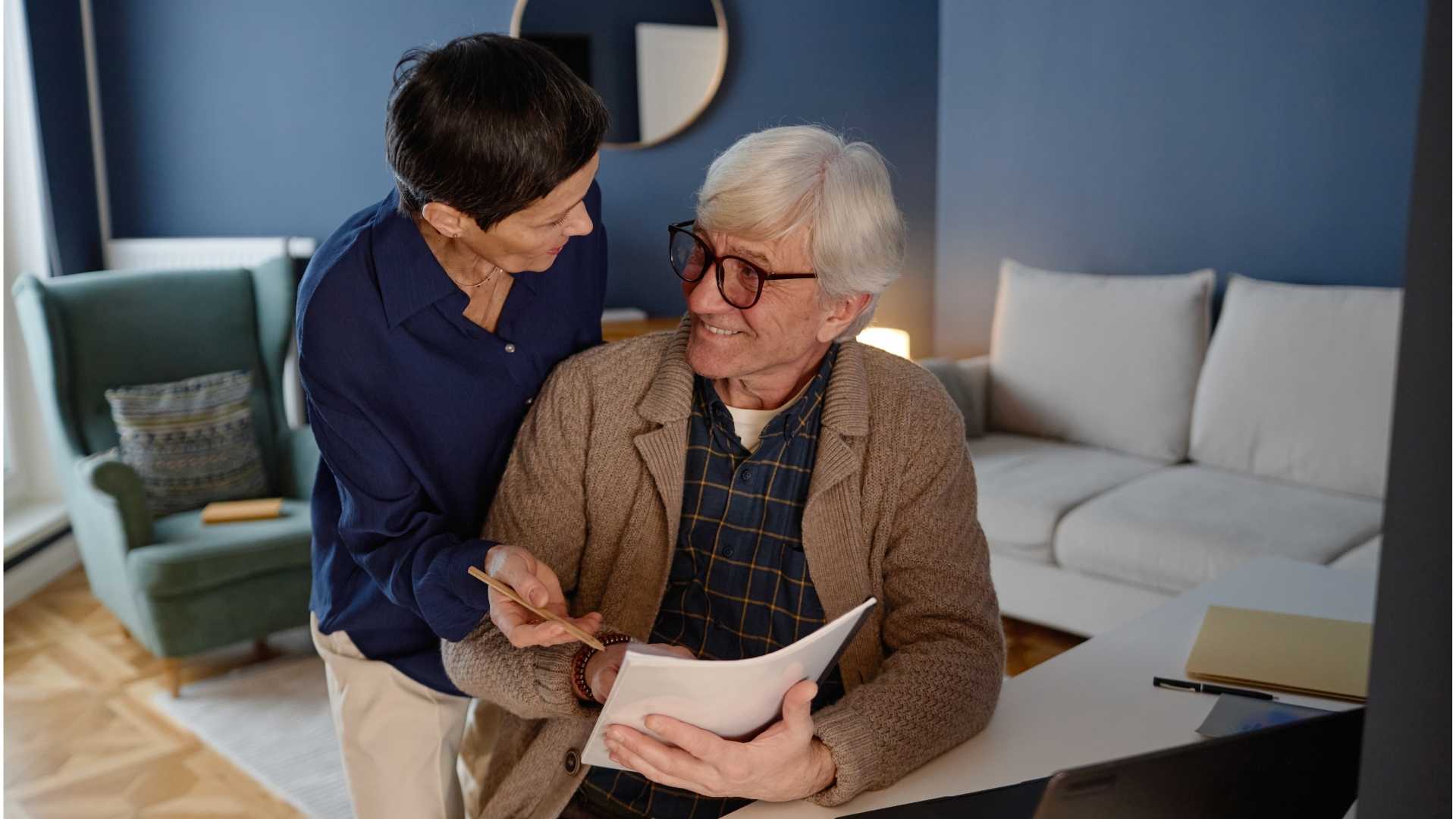
Unlike a traditional sale–purchase, a life annuity sale has certain specific features:
- The life annuitant (the seller) may retain ownership and use of the property while receiving an initial lump sum (the bouquet) as well as an annuity.
- The life annuity debtor (the buyer), on the other hand, can acquire a property at a reduced cost, but must wait until the seller’s death in order to benefit from it.
- Buying or selling a property as a life annuity: what are the advantages of this type of transaction? What are the risks? And what about taxation? We answer your questions.
What does a life annuity sale consist of?
A life annuity sale consists of transferring ownership of a real estate property in exchange for an initial payment followed by a regular annuity, calculated on the basis of the value of the property, the age of the seller, and their statistical life expectancy.
In the context of a life annuity sale, a distinction is made between:
-
the life annuitant, i.e. the seller, who receives the bouquet and the annuity;
-
the life annuity debtor, the buyer, who undertakes to pay the annuity until the death of the seller.
The two possible forms of life annuity
In Switzerland, two models coexist:
-
Occupied life annuity: the seller retains the property. They benefit from a Right of Use and Occupation (RUO) or from a usufruct, depending on the terms set out in the notarised deed. This configuration results in a significant discount on the value of the property, which attracts many buyers.
-
Vacant (free) life annuity: the property is transferred free of any occupation. The buyer may live in it, rent it out, or carry out renovation works. This less common version generally involves a higher bouquet and a higher annuity.
The difference between a life annuity and a deferred sale
A deferred sale shares certain similarities with a life annuity, but differs in the absence of uncertainty. The total price of the property is predetermined and paid over a defined period, without depending on the seller’s lifespan. The life annuity, by contrast, is based on a commitment whose duration cannot be known in advance.
Selling a property as a life annuity in Switzerland
Life annuity sales mainly appeal to property owners aged 70 and over who wish to improve their financial comfort while retaining their place of residence.
The advantages of selling as a life annuity
Receiving a substantial bouquet
The bouquet constitutes immediately available capital. In Switzerland, this initial amount is determined by negotiation, but it may represent between 20% and 40% of the discounted value of the property. It makes it possible to finance personal projects, carry out renovation works, or strengthen financial security.
Receiving a guaranteed lifetime annuity
The life annuity provides the owner with stable and regular income until their death. It may be indexed or adjusted according to the terms of the notarised contract, which helps preserve the seller’s purchasing power over time.
Continuing to live in one’s home
In the case of an occupied life annuity, the seller retains full use of their home thanks to the registration of the Right of Use and Occupation (RUO) or the usufruct in the Land Register. This reassuring continuity is one of the main arguments in favour of this type of sale.
How to sell as a life annuity
To sell a property as a life annuity, the transaction must obligatorily be executed before a cantonal notary. The notary guarantees legality. They draft and authenticate the contract, determine the rights of use, and ensure a balance between the parties.
The validity of a life annuity also relies on the concept of uncertainty: the life expectancy of the life annuitant must be uncertain. Without this element, the legal qualification of the life annuity could be challenged.
What taxation applies to a life annuity sale?
The life annuity received is partially taxable at both federal and cantonal levels. The taxable portion is determined by the probable remaining lifespan of the life annuitant according to Swiss mortality tables. The older the life annuitant is at the time of signing, the smaller the taxable portion of the annuity.
Any real estate capital gains tax remains due, in accordance with the rules of the canton in which the property is located. Depending on the holding period, the tax burden may vary significantly; this aspect should therefore be anticipated during negotiations.
Buying as a life annuity in Switzerland
Buying as a life annuity attracts investors interested in a long-term asset investment offering gradual financial visibility.
The advantages of investing in a life annuity
A reduced acquisition price
The buyer benefits from a substantial discount on the market price, particularly in the case of an occupied life annuity. This difference is calculated on the basis of the value of the seller’s Right of Use and Occupation (RUO) or usufruct.
Progressive and lighter financing
The absence of immediate full payment significantly limits, or even eliminates, the need for a large mortgage loan at the outset.
Indeed, the bouquet + annuity system makes it possible to spread the financial effort over time, transforming the acquisition into progressive financing based on own funds and future cash flows.
A secure investment
The life annuity is governed by an authentic deed drawn up by a notary and registered in the Swiss Land Register. Full ownership is transferred immediately to the buyer, which guarantees the security of the investment, even though use remains reserved to the life annuitant.
What are the risks of buying as a life annuity?
The main risk is linked to uncertainty: if the life annuitant lives for a very long time, the total cost of the acquisition increases. This risk is an integral part of the life annuity system and must be budgeted for when calculating profitability.
Furthermore, routine maintenance is in principle borne by the seller in an occupied life annuity, while major works may remain the responsibility of the buyer. The allocation of responsibilities is clearly set out in the contract.
What taxation applies to buying as a life annuity?
Each annuity payment is considered as the sum of two components:
-
one part as repayment of capital;
-
one part as interest.
From the time of acquisition, the property is included in the buyer’s assets. However, as long as the seller retains the RUO, the taxable value of the property for Wealth Tax purposes may be proportionally reduced, depending on cantonal practice.
Finally, notary fees and transfer duties are paid by the buyer and are calculated on the discounted value of the property, representing an immediate saving compared to a traditional sale.
How is the price of a life annuity calculated?
The calculation of a life annuity sale involves three components:
-
The market value of the property: this valuation follows traditional methods such as market comparison, condition of the property, surface area, location, features, etc.
-
The value of the RUO or usufruct: this depends on the seller’s age and Swiss mortality tables. The longer the life expectancy, the higher the value of the right of use, which reduces the share transferable to the buyer.
-
The bouquet: it generally represents 20% to 40% of the value of the property, but remains freely negotiable. The higher the bouquet, the more the annuity can be reduced.
As for the life annuity itself, it is calculated by dividing the residual value (market value – value of RUO or usufruct – bouquet) by the statistical life expectancy of the life annuitant:
- Annual annuity = (Property value – RUO/usufruct – Bouquet) / Life expectancy (years)
For example:
|
Age of the seller |
Property value |
Bouquet (25%) |
Value of the Right of Use and Occupation |
Geschätzte jährliche Rente |
| 75 years | CHF 900,000 | CHF 225,000 | CHF 350,000 |
≈ CHF 12,500 |
|
80 years |
CHF 900,000 | CHF 225,000 | CHF 300,000 |
≈ CHF 15,000 |
In conclusion, the older the seller is, the more the annuity tends to increase, all other things being equal.