
Night-time noise disturbance in Switzerland: rules, hours and responsibilities
In case of night-time noise disturbance, we recommend that you first resolve the issue amicably before calling the local authorities.
Night-time noise disturbance in Switzerland is strictly regulated and sanctioned, since night rest constitutes a pillar of quality of life.
- Even if there are no precise rules to determine what night-time noise disturbance is, it can nevertheless be defined according to the intensity of the noise, its duration, as well as its avoidable character.
- Night rest hours extend from 10 p.m. to 6 a.m.: during this period, any excessive noise can be considered as noise disturbance.
- Are you a victim of noise nuisances? Favour an amicable approach first before calling upon the authorities.
Night-time noise disturbance in Switzerland: what does it consist of?
Night-time noise disturbance is defined as any excessive sound nuisance that disturbs public tranquillity and the neighbours’ rest during the night period.
What is night rest in Switzerland?
Night rest is a period during which any excessive sound nuisance is prohibited. Noise intensity, duration, repetition and avoidable character…
The notion of noise disturbance is assessed according to several criteria, even if there are no clear rules determining precisely what a sound nuisance is.
Consequently, a noise that objectively disturbs a reasonable neighbour can be considered as noise disturbance, even if it does not exceed a precise decibel threshold.
The hours to respect
In Switzerland, night rest hours extend from 10 p.m. to 6 a.m., or even from 10 p.m. to 7 a.m. in certain residential areas. Nevertheless, each canton may provide nuances!
Noise after 10 p.m. is therefore generally prohibited, even when it comes from everyday activities (vacuum cleaner, music, heavy movements).
What about noise during the day?
Contrary to what one might think, excessive noises are also prohibited during the day. Thus, municipalities may be led to sanction daytime noise disturbance when it causes significant trouble.
Noisy household appliances, parties or repeated shouting may be considered as sound nuisances in Switzerland, especially when they follow one another without consideration for the neighbourhood. Quiet hours at midday (12 p.m. to 2 p.m.) also remain common.
What are the sources of noise forbidden during the night?
Swiss law distinguishes noise from the neighbourhood, noise linked to works, to animals, or to vehicles.
Noise coming from the neighbourhood
Swiss buildings generally have regulations annexed to the lease and based on Article 257f of the Code of Obligations, which requires the tenant to show consideration for neighbours. These rules prohibit:
- loud music after 10:00 p.m.;
- shouting, loud voices, as well as gatherings that are too lively;
- the night-time use of noisy household appliances.
Noise from works and construction sites
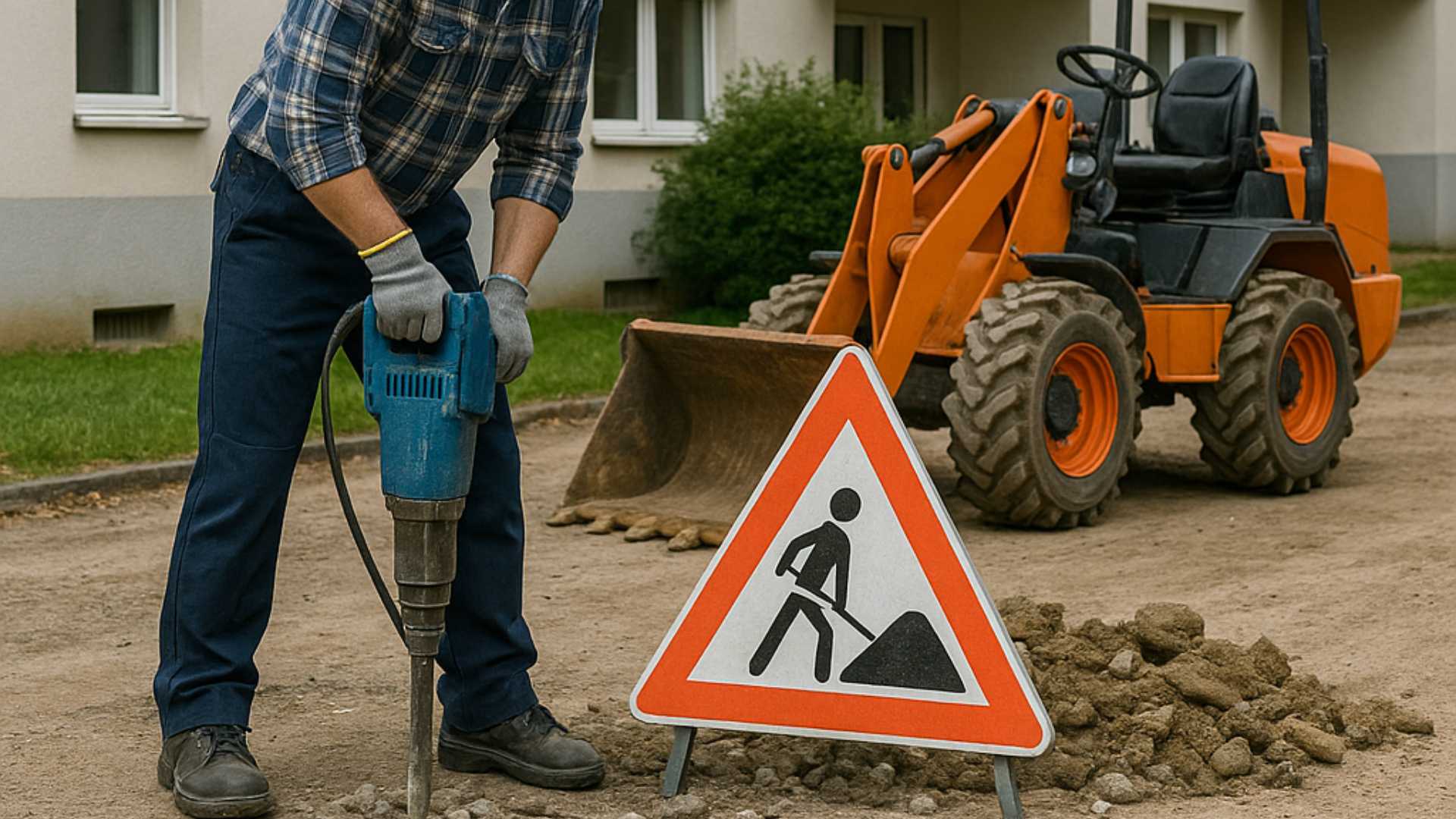
Noisy construction works are very strictly regulated, since municipalities impose precise time slots between 7:00 a.m. and 12:00 p.m., and between 1:00 p.m. and 7:00 p.m. Thus, works can never take place at night, except in absolute emergency.
Noise from domestic animals
In Switzerland, repeated barking is also considered as a disturbance to night-time calm. Indeed, barking that lasts for a prolonged period, especially during the night, may justify a warning or a fine.
Noise from traffic and vehicles
Modified vehicles, loud accelerations, abusive honking or motorcycle gatherings are also subject to the legal framework. The Swiss penal code provides sanctions for intentionally loud driving, especially between 10:00 p.m. and 6:00 a.m.
What consequences and sanctions exist in cases of night-time noise disturbance?
The Swiss system favours a warning, but sanctions may quickly become heavier in case of repeated offences.
Fines and penalties incurred
Sanctions for night-time noise disturbance take the form of a fixed fine. There is no uniform federal amount, since they are set by cantonal or municipal police regulations.
For minor cases and a first offence, a fine is generally between 100 CHF and 300 CHF, as can be seen in several cantons.
However, in case of repeated offences, particularly serious disturbance, or refusal to comply, the case is transmitted to the Public Prosecutor’s Office. A criminal procedure may then be opened, leading to a monetary penalty (daily-unit fines) whose total amount may reach several thousands of Swiss francs.
The role of the police
Once on site, the police assesses the objectivity of the sound disturbance and ensures that it violates the rest hours.
If the offence is clear, the police may issue immediately a fixed fine set by the canton. In cases of repeated offences or refusal to comply, a denunciation report is drawn up and transmitted to the Public Prosecutor’s Office (or the municipality), thus initiating a possible criminal procedure for disturbance of public order.
Implications in tenancy law
Art. 257f CO requires the tenant not to disturb neighbours. If the tenant persists in disturbing the tranquillity, the landlord may issue a formal warning.
In case of new nuisances, termination of the lease is admitted by case law, even if the tenant regularly pays the rent.
What to do in case of excessive sound nuisances?
Whether you are confronted with a noisy neighbour or someone reproaches you for excessive noise, several steps make it possible to restore calm while respecting Swiss night rest.
You are a victim of sound nuisances
Swiss law favours amicable resolution as long as this remains possible:
- Engage in a courteous dialogue: a neighbour is not always aware that the noise exceeds the reasonable limit. A calm discussion, where each person can express themselves serenely, often suffices to resolve the problem.
- Inform the property management or the landlord: if the nuisances persist despite a first approach, contact your management or your landlord to inform them and ask them to call the noisy neighbour to order.
- Prepare a complete file: certain municipalities ask the victim to keep a journal of the sound nuisances. It includes the date, the time, the nature of the noise (loud music, shouting, barking, household appliances), as well as the steps already taken.
- File a complaint for night-time noise disturbance: when disturbances become repetitive and dialogue has failed, you have no other choice but to contact the police.
You are the author of the noise
When one generates noise, it is possible to avoid most conflicts through a few simple reflexes. Here is how to stay on good terms with your neighbours:
- Adapt your noisy activities in the evening: loud music, vacuum cleaner or DIY should be limited from 9:00 p.m. onwards, so that calm is ensured from 10:00 p.m., a time often considered as the legal hour.
- Warn in case of a party or exceptional gathering: a note in the elevator or a message to the neighbours generally suffices to avoid a conflict.
- Avoid moving furniture and impacts on the floor: impact noises transmit vibrations that are hard to tolerate at night. Using protective pads, moving furniture during the day or acting gently helps reduce the noise intensity.
- Manage your pets: in case of noise (barking for example), it is recommended to identify the triggers in your animal (boredom, loneliness, corridor noises, anxiety) that cause the disturbance. If the problem persists, consider help from a dog trainer or behaviourist.
- Respect the building regulations: these complete the legal provisions and may provide stricter rules.
Acting preventively not only protects against a sanction: it strengthens trust with neighbours and ensures a pleasant living atmosphere for everyone!
Do you want to live in a quieter neighbourhood? The quality of your housing and your neighbourhood is essential for your well-being. If current sound nuisances push you to move, we can help you find your haven of peace.
Consult without delay the thousands of real estate listings available on dreamo.ch and find the accommodation that will guarantee you peaceful nights!