
Tutto quello che c’è da sapere sulla proprietà per piani (PPP)
La proprietà per piani (PPP) occupa una posizione centrale nel mercato immobiliare svizzero, in particolare nei cantoni romandi, dove l’abitazione collettiva si è fortemente sviluppata.
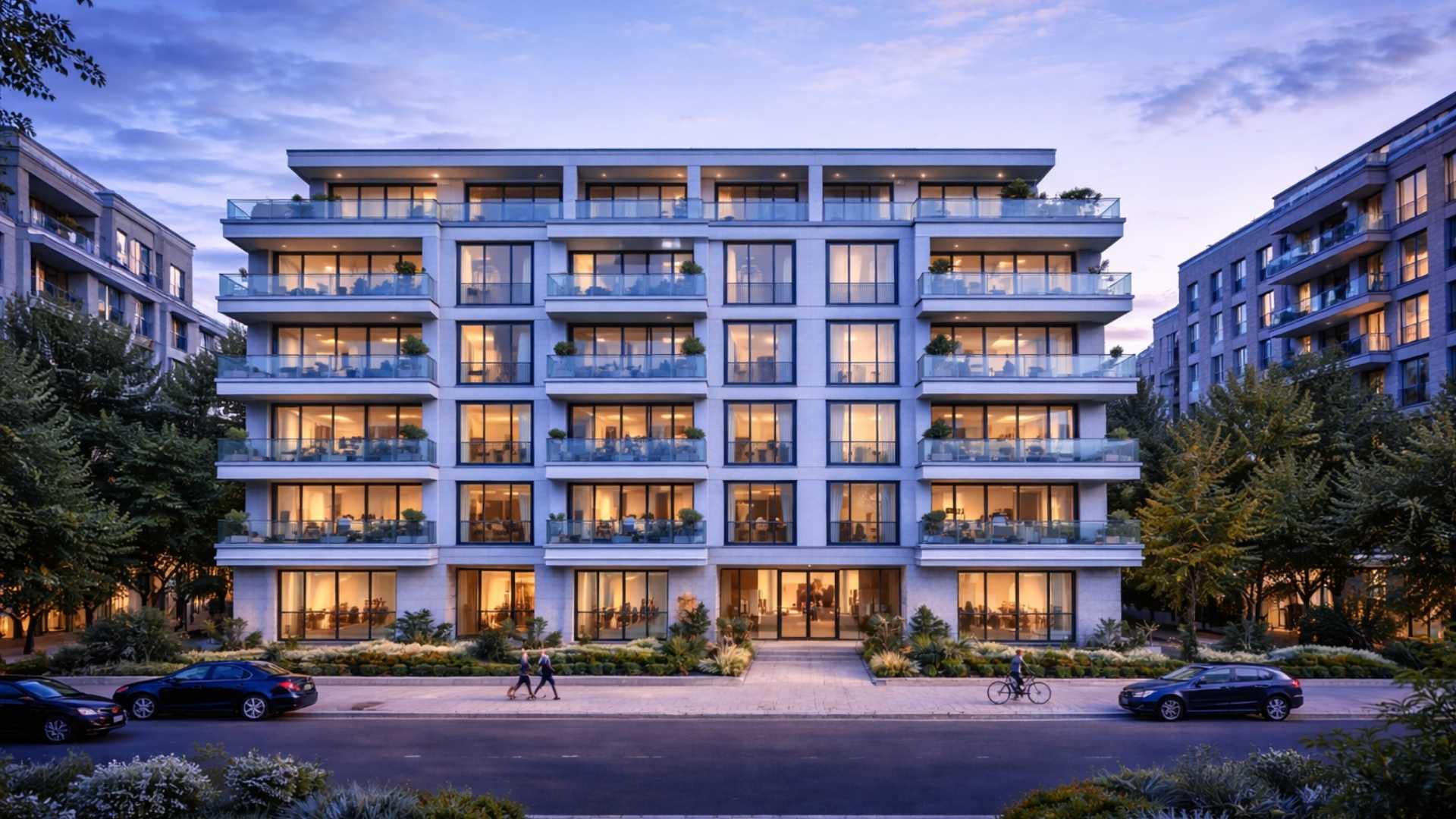
Condominium ownership allows several owners to live under the same roof while sharing common infrastructures and clearly defined responsibilities:
- It is the most common form of co-ownership in Switzerland and is also a preferred choice for investors.
- Each owner holds a private unit (apartment, cellar, balcony) while also owning a share of the common parts.
Decisions concerning the common parts are taken at the General Assembly of Owners (GA).
What is condominium ownership?
Condominium ownership: definition
Condominium ownership is defined by Articles 712a et seq. of the Swiss Civil Code. This legal regime establishes a specific form of co-ownership in which each owner holds a precisely defined share of the building, combined with an exclusive right to a specific apartment or unit.
This ownership share is recorded in the Deed of Constitution, the founding document that formalizes the creation of the condominium and determines the value of each unit.
Distinction between private and common ownership
In order to clearly distinguish what belongs to each individual and what falls under collective ownership, the law establishes a clear separation between:
Private ownership
It includes the elements of an apartment that are accessible exclusively to its owner. These include in particular:
-
interior partitions,
-
floors,
-
non-load-bearing walls,
-
private installations,
-
kitchens,
-
bathrooms,
-
most built-in equipment.
This scope may vary slightly depending on the provisions set out in the Deed of Constitution.
Common ownership
It includes all elements that ensure the stability, safety, or general functioning of the building:
-
façades,
-
roof,
-
load-bearing structure,
-
stairwell,
-
corridors, boiler room,
-
elevator,
-
main pipes;
-
etc.
Their management is the responsibility of all co-owners, who must ensure their maintenance, renewal, and modernization.
In this context, the Regulations for Administration and Use (RAU), annexed to the Deed of Constitution, specify the rights of each owner, the rules of community living, the procedures for convening assemblies, and the building’s maintenance practices.
Calculation of ownership shares
Ownership shares (or thousandths) determine both each owner’s voting power at assemblies and the allocation of common charges.
Their calculation is mainly based on the usable floor area of the apartment in relation to the total area of the building. This amount is then refined using criteria related to comfort and value, such as floor level, orientation, or the presence of private outdoor spaces (balcony, terrace).
In practice, the higher the ownership share, the more the owner contributes to common charges (maintenance, repairs, renovation fund), but the stronger their voting rights at General Assemblies.
How is a condominium managed?
You will find that a condominium functions like a small, structured community, with its own specific rules.
The General Assembly of Owners (GA)
The General Assembly (GA) is the body that governs all major decisions concerning the condominium. It brings together all owners at least once a year to approve the accounts, set the budget, address individual requests, and plan any potential works.
Adopted resolutions depend on the type of majority required:
-
Simple majority: applies to routine decisions such as approval of the accounts, renewal of maintenance contracts, or general administrative organization.
-
Qualified majority (double majority): applies to structural decisions, such as major works, amendments to the regulations, or interventions on structural elements. This majority requires both the approval of a majority of owners and a majority of ownership shares.
The condominium administrator: role and responsibilities
Appointed by the GA, the condominium administrator is essential to the daily and long-term functioning of the building. Their role is divided into two main areas:
-
Administrative and financial management: responsible for accounting (collection of charges, payment of invoices), preparation and conduct of General Assemblies, and above all the concrete implementation of all decisions taken by the owners.
-
Technical and operational management: coordinates works (quotes, supervision of contractors), manages maintenance contracts (elevator, heating), and handles everyday issues (leaks, minor internal disputes).
In French-speaking Switzerland, the diversity of cantonal practices and the density of the real estate stock require thorough mastery of local practices.
The renovation fund
The renovation fund is a mandatory reserve funded by regular owner contributions included in the common charges.
Its purpose is to ensure that the condominium has the necessary liquidity to finance major and costly future works, such as façade renovation, roof replacement, or modernization of technical installations and the elevator.
Good to know: a well-funded renovation reserve is a sign of a forward-looking community and helps secure your investment by avoiding unpleasant surprises. Conversely, an underfunded reserve is a warning signal that may indicate an extraordinary capital call (a large unexpected bill) shortly after purchase. Stay vigilant about this criterion if you are considering investing in a condominium!
Condominium ownership: who pays what?
Regarding common charges, each owner contributes according to their use of the facilities and according to the ownership shares defined in the Deed of Constitution.
Principle of cost allocation
Costs related to the building include expenses allocated on the basis of ownership shares:
-
general maintenance,
-
repairs,
-
collective insurance,
-
administration,
-
heating,
-
domestic hot water production,
-
maintenance of technical installations,
-
provisions for major works.
Certain expenses, particularly those related to heating and hot water, follow a different system.
Indeed, many condominiums in French-speaking Switzerland use individual heating and hot water cost allocation systems (IHCA/IHWCA) to distribute part of the costs more fairly.
This system allocates part of the costs according to actual consumption, measured by sensors installed on radiators and water pipes.
Annual budget and accounts
Throughout the year, you make regular advance payments (monthly or quarterly) intended to cover the building’s operating expenses.
Once a year, the administrator prepares a statement of accounts. This document compares the amounts you advanced during the year with the actual expenses you are required to pay based on your ownership share:
-
If you have paid too much (advances exceeding actual expenses), you receive a refund.
-
If actual expenses exceed your advances (for example due to a very cold winter or a minor technical issue), you must pay an additional charge.
This system ensures that the accounts are always accurate and that the budget reflects the condominium’s actual needs.
Are you planning to invest in condominium ownership in 2026?
dreamo.ch supports you throughout this process with precise valuation tools, a network of local experts, and independent advice to secure every stage of your real estate project.