
Where to Buy in Switzerland in 2026? Guide to Regions and Real Estate Trends
Between a historic tax reform and a shrinking supply of available properties, the Swiss real estate market in 2026 calls for a strategic approach. Discover the most promising regions and the key factors for a successful purchase this year.
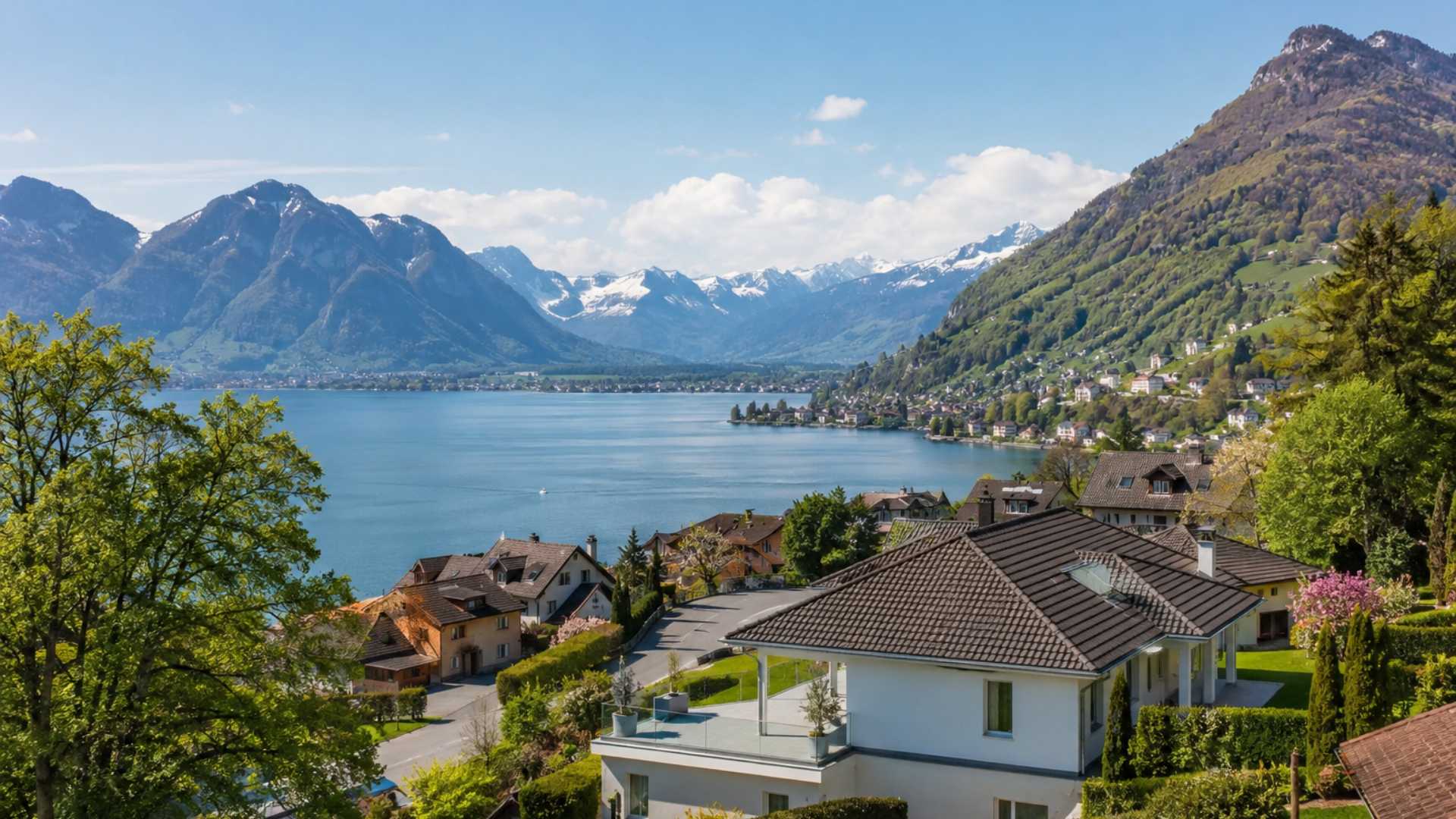
The Swiss real estate market is undergoing a profound transformation, driven by legislative changes and evolving lifestyles. To successfully navigate this market, here are the three key trends you should keep in mind:
-
The abolition of the imputed rental value is reshaping the profitability of homeownership, making fully owned properties more attractive than highly leveraged ones.
-
Energy efficiency has become the number one factor influencing property value, creating a widening price gap between certified energy-efficient homes and energy-inefficient properties.
-
The rise of remote working and continued investment in transport infrastructure are turning peripheral regions into some of Switzerland's most attractive areas for real estate investment.
The Swiss Real Estate Market in 2026: What You Need to Know
The year 2026 marks a turning point for Swiss homeowners, driven by major legislative reforms and an economy that, while cautious, remains one of the strongest in Europe.
Moderate Growth in Property Prices
According to the latest analyses from UBS and Raiffeisen, owner-occupied residential property prices continue to grow steadily.
Forecasts point to an increase of between 2% and 3% in 2026. Although this growth is more moderate than during the previous decade, it reflects renewed confidence among Swiss households in real estate as a safe-haven investment.
A Persistent Housing Shortage
The structural imbalance between housing supply and growing demand remains the main driver of the Swiss property market:
-
New housing construction continues to lag behind population growth, which is now approaching 9.2 million residents.
-
Administrative procedures for building permits remain lengthy, limiting the supply of new homes entering the market.
As a result, property prices remain well supported, protecting homeowners from any significant market correction.
Tax Reform: The Impact of Abolishing the Imputed Rental Value
Approved at the end of 2025, the abolition of the imputed rental value becomes fully effective in 2026. This reform fundamentally changes the economics of homeownership:
-
No more taxation of notional rental income: Homeowners are no longer taxed on the theoretical rent they could earn by renting out their primary residence.
-
Limited mortgage interest deductibility: In return, the tax deductibility of mortgage interest is now restricted.
-
Higher disposable income: For many households, particularly retirees who have largely repaid their mortgages this results in significant annual tax savings, making debt-free homeownership even more attractive.
Our Top 3 Regions for Buy-to-Let Investment in 2026
Investing in rental property today requires a strategic approach focused on long-term returns and minimal vacancy risk.
The Lake Geneva Region (Geneva – Lausanne)
The Lake Geneva region remains Switzerland's undisputed economic powerhouse. However, with city-centre prices reaching record highs, investors are increasingly turning to nearby municipalities that offer better value.
-
Yverdon-les-Bains: Now a thriving technology hub, the city offers higher rental yields than Lausanne.
-
Nyon and Morges: Reliable investment locations attracting international professionals seeking easy access via the Léman Express regional rail network.
Greater Zurich
Switzerland's economic engine continues to perform exceptionally well. The housing market remains extremely tight, with vacancy rates approaching zero in some districts.
Buying property in Zurich or its immediate surroundings, such as Winterthur virtually guarantees rapid occupancy and steady long-term capital appreciation.
Valais and Graubünden
Once considered purely seasonal destinations, these regions are now experiencing a genuine "four-season" transformation. The growth of remote work has turned resorts such as Crans-Montana and Flims into attractive semi-permanent places of residence. Rental investments therefore benefit from dual demand: tourism during the winter season and residential occupancy throughout the rest of the year.
Where Should You Buy Your Primary Residence in 2026?
Choosing a primary residence today is all about finding the right balance between quality of life and professional mobility.
The Swiss Plateau: The Ideal Choice for Families
The Swiss Plateau currently offers one of the best value-for-money propositions for families looking to buy a home.
This region still provides opportunities to purchase detached houses with gardens at competitive prices, offering spacious living areas that have become increasingly rare in major urban centres.
Thanks to the dense Swiss Federal Railways (SBB/CFF) network, cities such as Fribourg, Bern and Solothurn are exceptionally well connected. Living in these cities while commuting to the economic hubs of Lausanne or Zurich has become a common lifestyle.
Central Switzerland: Tax Advantages and Prestigious Living
Central Switzerland remains a safe choice for buyers seeking an outstanding living environment.
On the one hand, Zug continues to be Switzerland's benchmark for tax efficiency, attracting demanding buyers looking to optimize their financial situation.
On the other hand, the Lucerne region is becoming increasingly attractive thanks to its exceptional quality of life. It offers an ideal balance between moderate taxation and a spectacular natural environment of lakes and mountains.
The Jura Arc: Switzerland's Emerging Real Estate Frontier
Historically overlooked, the Jura Arc is enjoying renewed interest following major investments in transport infrastructure.
-
An attractive option for controlled budgets: The Canton of Jura and its surrounding areas offer excellent buying opportunities for those seeking larger properties at prices well below the national average.
-
The impact of improved rail connections: Infrastructure upgrades have significantly reduced travel times to Switzerland's major cities. As a result, towns such as Neuchâtel and Delémont have become increasingly competitive, attracting professionals drawn by the region's urban renewal.
Key Criteria for Buying Property in 2026
Energy Performance
Energy efficiency has become the leading factor in both property valuation and price negotiations.
-
The energy-efficiency premium: Homes certified under the Minergie standard or equipped with heat pumps attract strong demand and command premium prices.
-
The risk of depreciation: Energy-inefficient buildings experience immediate value reductions due to the high cost and complexity of the renovations now required to meet modern standards.
Accessibility and Transport
Connectivity remains the most important factor in protecting the long-term value of your real estate investment.
-
The network effect: The continued expansion of the Léman Express network and the increasing frequency of Swiss Federal Railways (SBB/CFF) services are significantly boosting the attractiveness of suburban municipalities.
-
Strong resale potential: A property located within a ten-minute walk of efficient public transport enjoys excellent liquidity regardless of market conditions.
Mortgage Interest Rates
Following recent market turbulence, mortgage rates have stabilized at approximately 1.5% to 2% for ten-year fixed-rate mortgages.
-
The flexibility of SARON mortgages: These allow borrowers to benefit directly from short-term market conditions and potentially reduce financing costs.
-
The security of fixed-rate mortgages: Combining a fixed-rate mortgage with part of your financing provides valuable protection against future global economic uncertainty.
FAQ
What is the main benefit of abolishing the imputed rental value for homeowners?
The primary benefit is the elimination of tax on notional rental income. For homeowners with little outstanding mortgage debt, this directly increases their monthly disposable income.
Is investing in mountain properties risky in 2026?
Not if you choose four-season destinations. Demand for a healthy living environment combined with remote working has made these markets significantly more stable than in the past.
Why choose Fribourg as your primary residence?
Its strategic location between Lausanne and Bern offers property prices that are up to 30% lower than those in the Lake Geneva region, while maintaining excellent rail connections.
How does energy efficiency affect my mortgage?
Swiss banks now offer green mortgages with preferential interest rates for Minergie-certified properties or homes with excellent energy performance ratings (CECB A or B).
Is Greater Zurich still accessible to private buyers?
Buying in Zurich's city centre remains challenging. However, surrounding municipalities such as Winterthur still offer genuine opportunities, with extremely low vacancy risks and strong long-term investment potential.