
Why buy a house on the outskirts of Switzerland?
Buying a house on the outskirts of Switzerland makes it possible to double your living space and reduce your tax burden thanks to favorable municipal tax rates.
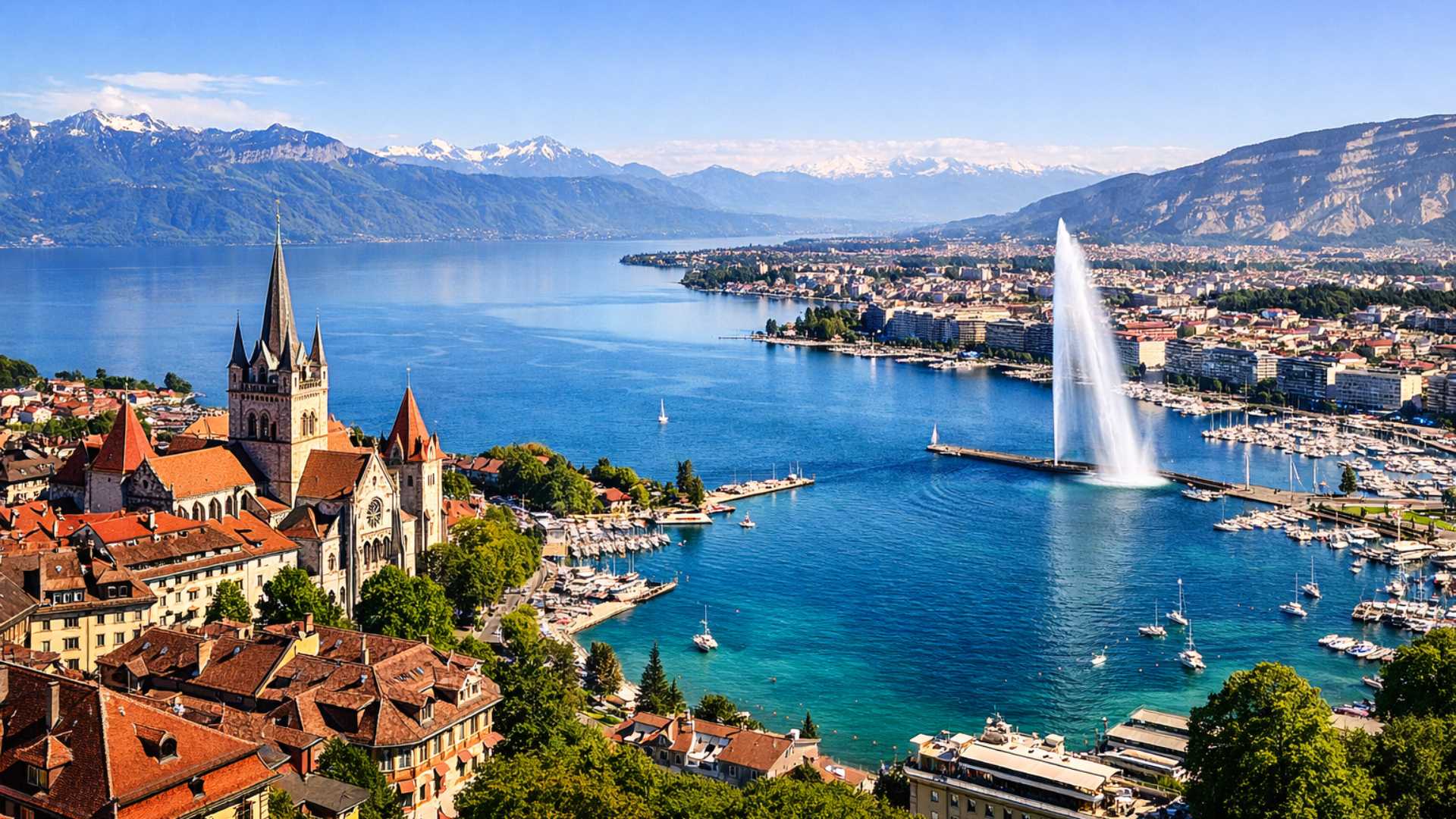
Becoming a homeowner away from the urban hustle offers unique opportunities, provided you carefully prepare your project when buying a house on the outskirts of Geneva, Lausanne, or Zurich:
- The current real estate market shows growing attractiveness for outlying municipalities, offering a better price-quality ratio than saturated city centers, where prices often exceed CHF 15,000 per square meter.
- Choosing to live outside dense urban areas allows access to larger living spaces while enjoying a preserved natural environment and the tranquility essential for family life.
- Switzerland’s excellent connectivity ensures commuters a perfect balance between urban professional life and residential comfort, with train connections running every 15 to 30 minutes.
City or outskirts: making the right choice for your home
The choice between city center and surrounding areas has a direct impact on your daily life and long-term finances.
Price comparison between city and countryside
Price differences per square meter between central Geneva or Lausanne and surrounding areas such as La Côte or Gros-de-Vaud are significant.
In Geneva, an apartment in the city center can reach CHF 18,000 per m², compared to CHF 9,000 to 11,000 for a house in the outskirts. Key points include:
- Living space: moving just twenty minutes away from the city often gives you 40% more space.
- Monthly costs: high urban rent can often cover the mortgage payments of a house with a garden.
- Access to ownership: entry costs are much more affordable for young families.
Taxes and annual budget
Tax rates vary significantly from one municipality to another within the same canton. Living in a nearby village can save thousands of francs per year thanks to more favorable local tax rates. The impact is immediate:
- Borrowing capacity: lower taxes increase disposable income and make it easier to obtain a larger loan.
- Available income: tax savings directly improve your standard of living.
- Savings: these gains can be used for renovations or faster mortgage repayment.
Quality of life and transport
Many households seek a balance between lakes, mountains, and the calm of residential areas. Living in the outskirts allows you to enjoy nature without social isolation. The density of the transport network is a major advantage:
- Regional transport: beyond national rail lines, systems such as LEB, TPG in Geneva, or tl in Lausanne efficiently connect residential areas to business centers.
- Travel time: reliable trains allow you to use commuting time for reading or relaxing.
- Environment: peace and quiet after work helps disconnect from professional pressure.
The advantages of owning property in the outskirts
Living outside city centers significantly improves comfort, offering space and flexibility that are nearly impossible to find in urban areas.
More space without increasing your budget
The Lausanne real estate market continues to push families toward areas like Gros-de-Vaud or La Broye.
With the same investment of CHF 1.5 million, you can move from a 100 m² apartment in the city center to a detached house of 160 m² with 500 m² of land in the outskirts.
Greater independence thanks to remote work
Outside city centers, properties often allow for separate entrances for offices or consulting spaces.
In a context where remote work is now standard, this separation allows you to fully enjoy the calm of residential areas while avoiding the overlap between work and shared living spaces.
Building wealth through pension funds
Buying property in peri-urban areas is often the only way for the middle class to access homeownership. Using pension assets to finance a primary residence allows you to build long-term capital.
Property values in well-connected areas remain historically stable. In addition, mortgage repayment replaces "lost" rent with forced savings.
How to successfully buy property outside urban centers
Moving away from cities is a smart strategy, provided it does not negatively impact your daily life. A successful purchase depends on three key factors:
- Transport connections: check train frequency and access to major highways such as A1 or A12.
- Local infrastructure: ensure proximity to schools, shops, and leisure facilities.
- Property valuation: banks carefully assess building condition and land use index, which impacts financing and resale potential.
Best areas to buy in the outskirts of major Swiss cities
Buying in the outskirts does not mean fewer opportunities. Some municipalities offer an ideal balance between accessibility, taxation, and quality of life.
Around Geneva
Geneva attracts many buyers, but high prices push families toward well-connected areas:
- Nyon and La Côte: direct train access and attractive lakeside environment
- Ferney-Voltaire/Saint-Genis-Pouilly (France): interesting tax alternative
- Versoix/Genthod: close proximity with a more residential atmosphere
Around Lausanne
Lausanne offers a strong balance with its surrounding regions:
- Gros-de-Vaud (Echallens, Assens): attractive prices and good access via LEB
- La Broye (Payerne, Moudon): strong demand growth
- Lavaux: highly sought-after area between lake and vineyards
Around Zurich
Zurich remains the country’s economic hub, with a well-structured outskirts:
- Winterthur: dynamic secondary city with more affordable prices
- Uster/Wetzikon: excellent rail connections
- Zug: highly competitive taxation, though prices are rising
FAQ: Buying property in the outskirts
Is it harder to get a mortgage?
No, Swiss banks assess properties in the same way as long as the municipality is attractive and well connected.
What is the impact of commuting costs?
Transport costs must be considered, but they are often offset by lower property prices and tax advantages.
Is resale riskier?
No, well-connected peri-urban areas benefit from steady demand, making them a secure investment.
Are schools in the outskirts good?
The Swiss education system is highly consistent, and schools in the outskirts are often modern and less crowded.
Can pension funds be used?
Yes, pension funds can be used for any owner-occupied property, whether it is a new house or a renovation project.