
Purchasing a secondary residence in Switzerland is possible both for residents and for foreigners. However, you must comply with the requirements of the Weber Act and the Koller Act, depending on your situation.
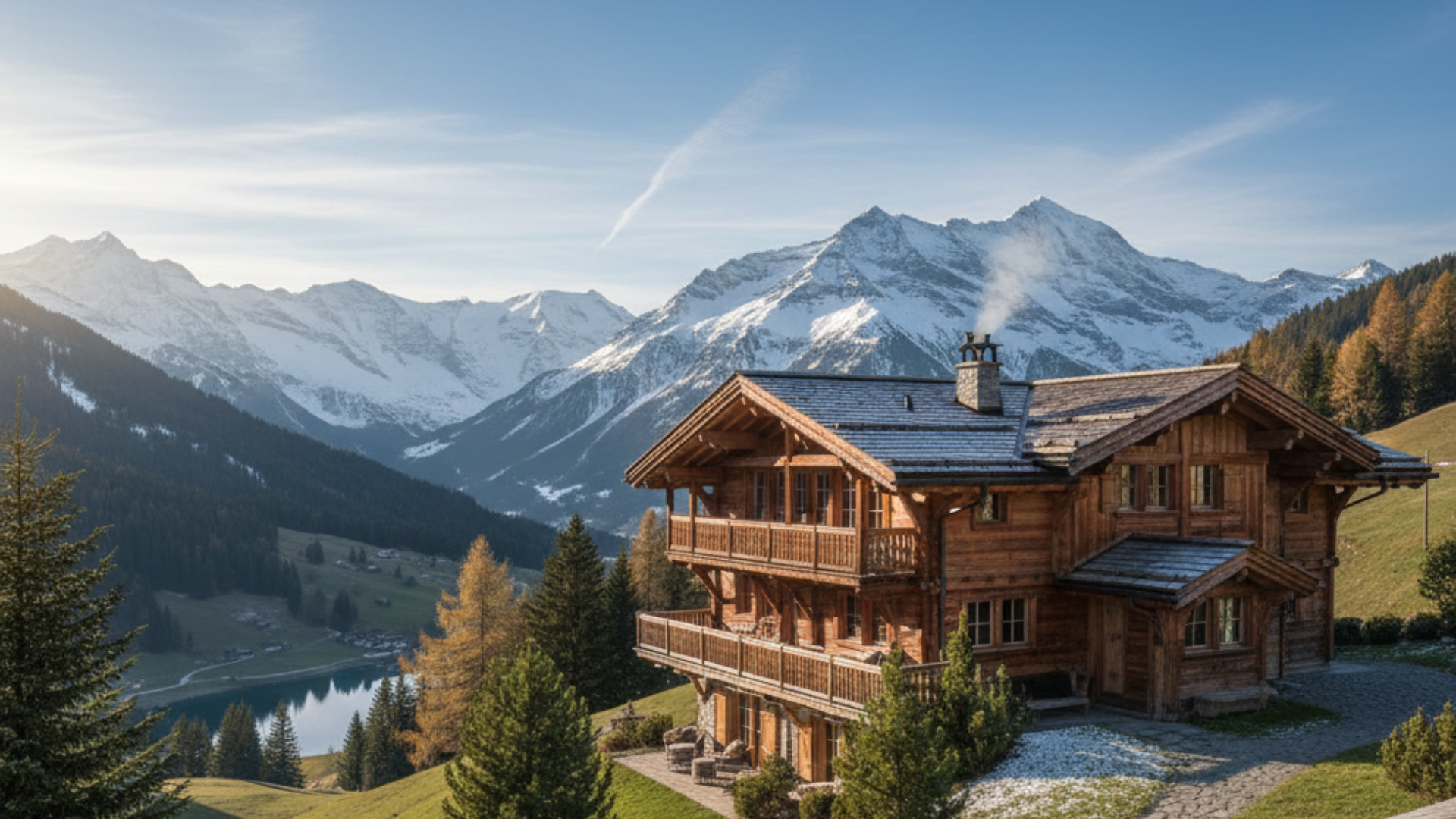
Swiss law defines a secondary residence as a dwelling used for relaxation or vacation purposes, distinct from the main residence. It constitutes neither the legal domicile nor the principal place of professional activity of the owner. Whether you are a citizen or not, you may already have considered acquiring a secondary residence in Switzerland. However, be aware that the market is far from free:
-
The legal framework strongly regulates the construction and purchase of secondary residences in Switzerland (Lex Weber and Lex Koller).
-
Financing requires more personal funds and prohibits the use of the 2nd pillar.
-
The taxation of secondary residences involves specific costs and obligations.
Purchasing a Secondary Residence in Switzerland: What Legal Framework?
In the Swiss Confederation, secondary residences are subject to two major legal texts: the Lex Weber, which regulates construction, and the Lex Koller, which governs purchases by foreign persons.
The Lex Weber
Adopted in 2012, the Lex Weber prohibits the construction of new secondary residences in municipalities where the proportion of holiday homes exceeds 20% of the housing stock. This measure aims to limit overbuilding in tourist areas that are already saturated.
For the buyer, this means that in these municipalities, it is only possible to purchase an existing dwelling that already holds the legal status of a secondary residence, meaning it was built before March 2012. Enlargement or transformation of the property is tolerated within a limit of about 30% of the existing surface area.
Good to know: some municipalities offer regulated alternatives, such as qualified tourist accommodation. This refers to a dwelling that must be rented out for part of the year, which allows for partially bypassing the restriction.
The Lex Koller
The Lex Koller regulates access to property for persons not domiciled in Switzerland. Foreigners who do not reside in Switzerland must obtain a cantonal authorization to acquire a secondary residence. Delivered in limited numbers each year, these permits come with strict conditions.
The main restrictions are as follows:
-
Maximum living space of around 200 m².
-
Plot generally not exceeding 1,000 m².
-
Prohibition of long-term annual rental (exclusively private use).
Citizens of the European Union or EFTA (European Free Trade Association) who are domiciled in Switzerland benefit from a more flexible regime, similar to that of Swiss residents.
How to Finance Your Secondary Residence in Switzerland?
Swiss banking institutions apply stricter financing conditions for a secondary residence than for a primary residence. The goal is to limit default risks associated with properties that are not essential for living.
Banking Requirements
Banks generally require a personal down payment of more than 20% of the purchase price. Depending on the financial situation of the borrower, this rate may reach 30% to 40%.
The calculation of financial capacity follows the one-third rule: total costs (interest, amortization, maintenance) must not exceed one third of gross income. This calculation already includes costs linked to the primary residence, which increases the requirements.
Banks also use a theoretical mortgage rate of about 5% to assess solvency, regardless of the actual rate applied.
The Prohibition of Using the 2nd Pillar
Note that early withdrawal of 2nd pillar (LPP) funds is only authorized for the purchase of a primary residence. It is therefore impossible to use it to buy a secondary residence.
This means that financing must come from your own funds, personal savings, or your unrestricted 3rd pillar (pillar 3b).
The Question of the Property’s Rental Value
The bank is cautious in evaluating a property subject to the Lex Weber, as its resale or rental value may be limited. This caution directly affects the amount of the loan granted and the possible loan-to-value ratio.
What Taxation Applies to a Secondary Residence in Switzerland?
Future buyers should know that owning a secondary residence entails tax obligations and additional costs. In other words, do not stop at the purchase price of your property. Each canton has its own rules, but some principles apply across the entire country.
Taxation of the Rental Value
In September 2025, the Swiss people approved the abolition of the imputed rental value for dwellings occupied by their owners. However, the reform will only enter into force after the adoption and implementation of the implementing laws; until that date, the current system continues to apply. Thus, even if the dwelling is not rented out, the owner of a secondary residence must declare an imputed rental value corresponding to the theoretical rent that he or she could receive. This value is added to taxable income. The property is also subject to wealth tax in the canton where it is located.
From the entry into force of the reform (earliest at the beginning of 2028), the imputed rental value will no longer be taxed for owner-occupiers. In return, the cantons will have the possibility to introduce a specific tax on secondary residences in order to compensate for tax losses.
Tax Deduction of Expenses
Mortgage interest and maintenance or renovation costs are still deductible from taxable income, which helps partially reduce the tax burden. However, these deductions generally do not suffice to fully offset the taxation of the imputed rental value. They will be largely abolished once the abolition of the imputed rental value definitively enters into force.
Additional Charges
The owner must also pay:
-
Property tax, levied by certain municipalities.
-
Tourist taxes or municipal taxes specific to secondary residences.
-
Co-ownership fees and the renovation fund, in the case of a condominium (PPE).
Our Advice to Properly Prepare Your Purchase
Before concluding a purchase, several checks help avoid administrative or financial issues.
Verification of the Property’s Status
Before signing anything, we recommend checking with the municipality that the property indeed holds the legal status of a secondary residence.
For constructions built after 2012 in quota zones, this verification is essential. Also, be sure to consult the Land Register of your municipality to identify any easements or usage restrictions.
Review of the Co-ownership (PPE)
In the case of a condominium, you must take into account the co-ownership regulations, the state of the renovation fund, and the monthly charges. These factors directly influence the profitability and management of your future property.
Purchase as a Foreigner and Non-Resident in Switzerland
Persons residing abroad must obtain a cantonal authorization before purchasing and comply with the limits imposed by the Lex Koller. We recommend making an appointment with your municipal office or the cantonal real estate department to find out about quota availability.
Conclusion
While buying a secondary residence in Switzerland is not always simple, the project remains entirely feasible if you comply with the legal framework and have sufficient personal funds.
dreamo.ch supports you in searching for, selecting, and acquiring your secondary residence, helping you navigate the Swiss real estate market with precision. Discover the properties for sale in Switzerland.