
How can one anticipate real estate market fluctuations?
The article shows that the Swiss real estate market remains highly strained due to strong demand, historically low vacancy rates and generally favourable macroeconomic indicators (rising GDP, controlled inflation, low mortgage rates). Despite some risk signals such as the slight increase in the UBS Bubble Index, the outlook for 2026 remains positive, supported by demographic trends, urbanisation and growing confidence among industry professionals.
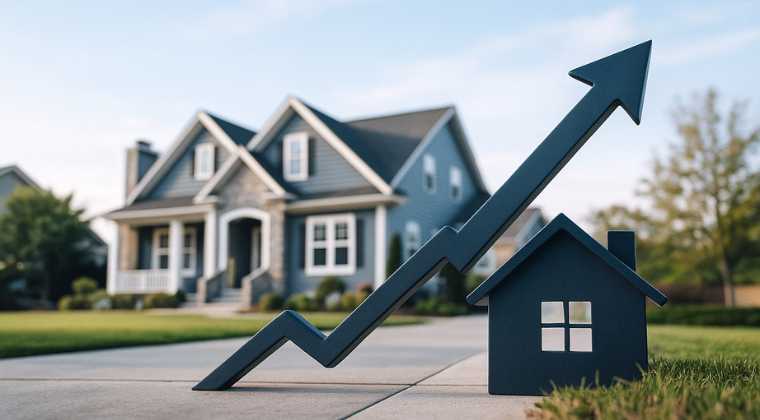
Fluctuations in the real estate market never occur by chance. They are closely linked to several macroeconomic factors whose analysis makes it possible to understand the state of the market and anticipate its evolution. By mastering these indicators, professionals can identify upcoming trends and make safer investment decisions for 2026.
Understanding the Logic of Economic Conditions
The real estate market does not react immediately to changes in economic conditions. Unlike financial markets, it follows economic cycles (expansion, slowdown, or recession) with a time lag. Construction decisions, supply adjustments and purchasing behaviours take time to materialize.
This delay is an advantage for professionals: by closely monitoring early economic signals (such as credit market statistics, mortgage demand or migration trends), it becomes possible to anticipate future effects on the real estate market. For example, when banks observe a continuous decline in mortgage applications over several months, this generally signals a future drop in buying demand. This signal appears well before prices or selling times begin to ease.
Macroeconomic Indicators
The Swiss National Bank (SNB) Policy Rate
Interest rates are one of the most decisive indicators for anticipating real estate market fluctuations. They simultaneously influence financing costs, purchasing demand, asset values and the attractiveness of real estate compared to other asset classes.
-
Low interest rates stimulate real estate investment: they reduce mortgage costs, increase borrowing capacity and support demand.
-
They also encourage rising prices: easier access to credit increases competition between buyers, leading to higher demand — which can push sellers to raise selling and rental prices.
-
Favourable refinancing conditions improve the profitability of existing properties, encouraging investors to hold or expand their portfolios.
To correctly anticipate market movements, investors can monitor these dynamics and adjust their portfolio strategies according to interest rate conditions and expected returns.
Inflation
Inflation corresponds to the general increase in the price of goods and services over a given period. It reduces the purchasing power of money and directly influences investment decisions and the dynamics of the real estate market.
Real estate is often perceived as a hedge against inflation: when the value of money decreases, real estate assets tend to maintain or increase their value over time. Moreover, in inflationary periods, borrowing becomes advantageous: a loan taken out today is repaid tomorrow with depreciated money, which reduces the real weight of debt and can reinforce interest in real estate investment.
Risks and Effects of Inflation on the Real Estate Market:
-
Rising construction costs: materials and labour become more expensive, increasing the cost of new projects and potentially slowing construction.
-
Potential interest rate hikes: to control inflation (by reducing the money supply), the SNB may raise its policy rates, which can slow down mortgage lending.
-
Pressure on household purchasing power: if wages do not keep up with inflation, the ability to buy or rent property decreases, which may reduce demand or shift it toward other market segments (e.g., single-person households).
By monitoring SNB and FSO publications, professionals can identify emerging inflationary pressures. In Switzerland, inflation is generally more stable than in many countries, but external factors such as rising commodity prices, geopolitical shocks or public health restrictions may influence the inflation rate.
GDP and the Macroeconomic Environment
GDP growth directly influences the evolution of the real estate market. When the economy expands, household disposable income increases, strengthening purchasing capacity and driving housing demand. A favourable economic environment therefore supports transactions and the appreciation of real estate assets.
A dynamic labour market provides a foundation for stability and appreciation in the real estate sector. It is useful to analyse not only total employment figures but also the quality of newly created jobs and income distribution, which determine the dynamics of real estate demand.
-
An increase in employment creates additional demand for housing,
-
rising wages allow households to afford higher rents and purchase prices,
-
growing incomes also support investment in commercial real estate.
Economic performance is directly reflected in the commercial real estate market:
-
Expanding companies seek more office and warehouse space,
-
new business creation increases demand for surfaces,
-
a dynamic retail sector strengthens the need for commercial spaces.
Currently: In Switzerland, GDP grew by around 1.5% between 2024 and 2025, continuing a linear and steady growth trend. This development suggests favourable economic prospects for 2026.
Demographic Trends
Demographics are one of the most reliable indicators for anticipating the evolution of demand.
-
Population growth automatically increases the need for housing.
-
Ongoing urbanisation continues to concentrate demand in city centres and major urban areas, supporting real estate values in urban zones.
-
Changes in lifestyle patterns (remote work, more flexible mobility, growth in single-person households) are reshaping the types of properties people are looking for.
-
Increased demand for housing adapted to older adults (accessible, safe, close to essential services).
For real estate professionals, integrating these trends makes it possible to adjust supply, identify promising markets and develop products that match the real needs of the population.
Specialised Real Estate Indicators
Vacancy Rate
The vacancy rate is a key indicator for measuring the tension between supply and demand. In Switzerland, it has been decreasing continuously for several years: as of 1 June, 3,519 fewer vacant dwellings were recorded, a 6.8% drop and the fifth consecutive decrease. With a national vacancy rate close to 1%, the market remains highly strained.
For 2026, this trajectory suggests even fewer available dwellings, confirming sustained demand across most regions, both in the rental and ownership markets.
Mortgage Loans
Mortgage rates remain generally low, even though fixed rates are still higher than variable ones due to the lower risk for banks. This low level of interest rates continues to favour borrowing and supports the demand for home ownership, particularly among:
-
households with available capital,
-
families,
-
older buyers seeking to stabilise their financial situation.
A low-interest-rate environment therefore helps maintain active demand, even in a more cautious economic context.
Swiss Residential Real Estate Price Index (IMPI)
The Swiss Residential Real Estate Price Index (IMPI) for the 3rd quarter of 2025 increased by 0.8% compared with the previous quarter, reaching 124.3 points (base 2019 = 100). Year-on-year, residential property prices rose by 5.2%.
This dynamic confirms a market that continues to trend upward, driven by insufficient supply and persistent demand.
Swiss Real Estate Sentiment Index (sresi®)
The sresi® 2025 shows a significant rebound in confidence within the sector. In two years, the index rose from a low of –77.4 points to a record +69.5 points.
Despite a cautious reading of the macroeconomic situation, professionals expect positive prospects, especially in the residential and logistics segments.
Real Estate Risk Indicators: UBS Bubble Index
The UBS Swiss Real Estate Bubble Index measures overheating risk by evaluating the gap between property prices and their fundamentals (income, rents, mortgage debt, buy-vs-rent cost comparison, price dynamics).
Between the 2nd and 3rd quarter of 2025, the index rose from 0.20 to 0.29, signalling a slight increase in risk, but not an alarming situation.
Some regions nonetheless remain more exposed:
-
tourist areas in Graubünden,
-
the Lake Geneva region,
-
Yverdon-les-Bains.
How You Can Anticipate Market Fluctuations
-
Monitor mortgage rates and SNB policy: for example, an increase in interest rates leads to lower buying demand, longer selling times and downward pressure on prices. If inflation rises, interest rates will increase (regulated by the SNB). High inflation can also raise construction costs and slow down new projects.
-
Track key real estate indicators, such as vacancy rates and price developments.
-
Stay informed about demographic trends, including immigration and population ageing.
-
Read FSO analyses: a single indicator is never enough.
Conclusion
The real estate market can be anticipated by monitoring a few key indicators: interest rates, inflation, economic conditions, demographic trends and specialised real estate indices. By combining these data, professionals gain a reliable understanding of future pressures on supply, demand and prices, enabling them to adjust their investment strategies with precision.
Sources
immo-diva.ch - Article
raiffeisen.ch - Article
bfs.admin.ch - Article
seco.admin.ch - Article
kof.ethz.ch - Article
migrobank.ch - Article