
How can you purify the air in your home?
Purifying the air in one’s home means identifying sources of pollution, adopting simple habits, and favoring good ventilation, healthy materials, and natural products to protect health and well-being in daily life.
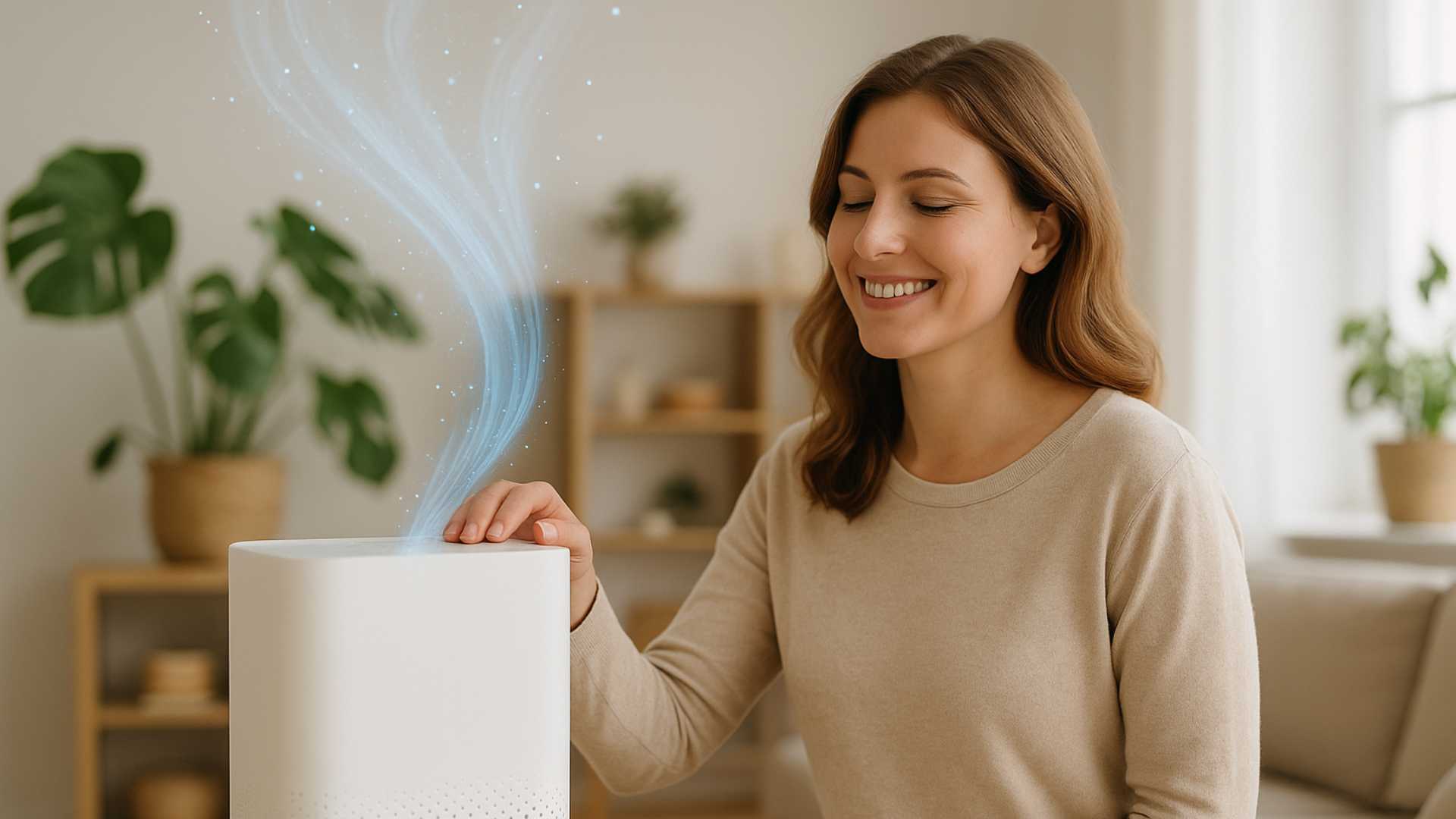
With the arrival of winter, we spend more time indoors. Yet, the air in our homes is not always as healthy as we think: dust, pollen, mold, and volatile organic compounds (VOCs) can affect our health, often without us realizing it.
These pollutants come not only from outside, but also from building materials, the ventilation system, or even from our daily habits.In this article, we give you a few simple and effective tips to breathe purer air at home.
1. Identify the sources of pollution
We often don’t realize it, but indoor air can be up to ten times more polluted than outdoor air. Three sources explain this phenomenon:
-
Modern homes are becoming better and better insulated. This is an advantage for saving energy, but a disadvantage for air quality: the house becomes airtight, the air is renewed less, and pollutants, humidity, or mold accumulate.
-
Scented candles, incense, deodorizing sprays, or chemical cleaning products release harmful substances. Used regularly, they degrade air quality without us noticing it.
-
Paints, glues, varnishes, insulators, or furniture made of synthetic materials can emit volatile organic compounds (VOCs) for years. Since the post-war period, these materials have largely replaced wood and stone, which are nevertheless healthier.
These invisible pollutants are not harmless: they can cause headaches, asthma, allergies, sleep disorders, or, in the most serious cases, respiratory or cancerous diseases.
Radon, a natural radioactive gas, is moreover responsible for several hundred deaths from lung cancer each year in Switzerland.
2. Adopt the right daily habits
Before relying on technological solutions, a few simple reflexes are often enough to improve the air quality in the house:
-
Air out every day, even in winter: ten minutes in the morning and in the evening are already enough to renew the air and remove humidity.
-
Limit scented and chemical cleaning products: prefer natural alternatives such as black soap, white vinegar, or baking soda.
-
Avoid drying laundry indoors, so as not to increase the humidity level.
-
Regularly maintain your heating appliances to prevent any harmful emissions and ensure good energy efficiency.
3. Clear the bottom of doors to let air circulate
Air quality also depends on good circulation between rooms.
Air must be able to pass naturally from the so-called dry rooms (bedrooms, living room) to the humid rooms (kitchen, bathroom, toilet), where it is then evacuated by the ventilation system.
For this renewal to take place correctly, it is necessary to leave a space of at least 1 cm between the bottom of the door and the floor. This allows fresh air to circulate better, to eliminate humidity and pollutants, and to maintain a healthier atmosphere throughout the home.
4. Ensure proper ventilation
Good ventilation is essential to keep healthy air in the home. A simple-flow mechanical ventilation system (single-flow VMC), well maintained, already allows good air renewal. However, the most efficient solution remains the double-flow VMC: it filters the incoming air while recovering the heat from the outgoing air, which limits energy losses.
Also remember to replace filters regularly, in order to effectively trap pollen, dust, and bacteria. Finally, a well-designed installation prevents air stagnation and thus avoids the accumulation of pollutants in certain areas of the home.
5. Air out during cooking
We don’t always think about it, but cooking also pollutes indoor air, even when odors are not noticeable. Cooking fumes can release harmful, even carcinogenic, substances that accumulate in the house. A simple action helps to limit these risks: open wide the windows during and after cooking, especially if you don’t have an efficient hood. That is enough to remove steam, suspended fats, and pollutants, while renewing the air more quickly.
6. Avoid smoke of all kinds to purify the air
Limit any source of smoke: incense, scented candles, cigarette smoke, Armenian paper to burn, etc. All combustion indeed generates fine particles and VOCs, which you breathe.
It is a source of indoor pollution that can cause respiratory problems.
Aerosols, indoor perfumes, scented sprays, and fragrance diffusers are also not recommended because they emit VOCs.
To replace the scents, certainly pleasant, of essential oil drops diffused by diffusers (citrus, lavender, etc.), it is preferable to open the windows every day, morning and evening, to renew the indoor air of our homes.
7. Avoid smoke to purify the air
The quality of indoor air is determined from the design of the dwelling. During construction or renovation, choose healthy materials with low pollutant emissions. Natural paints, solvent-free glues, untreated wood, or ecological insulators contribute to a healthier environment for you and more respectful of the planet.
- For façades: lime and sand.
- For insulation: hemp, straw, linen, wood fiber, glass wool, or even recycled materials.
- For the structure: wood, or natural alternatives such as raw earth.
- For finishes: solvent-free paints, glues, and sealants, clay coatings, and cork for floors.
8. Use the right products to purify your air
Cleaning products often promise cleanliness, shine, and exotic fragrances.
However, behind these promises often hide chemical and toxic substances, responsible for volatile organic compounds (VOCs) that are harmful to health and the environment.
It is therefore better to keep it simple: a multi-purpose product is most of the time sufficient. The accumulation of different cleaners can also cause chemical reactions and release even more pollutants. Always respect the doses recommended by the manufacturer, and favor natural and traditional products, such as:
-
white vinegar,
-
lemon,
-
black soap,
-
or Marseille soap.
9. Install plants to purify the air of your home
Some indoor plants do not only embellish your home: they also help to naturally filter the pollutants present in the air. Here are some particularly effective species:
- Ficus, areca, kentia, spathiphyllum: absorb volatile organic compounds (VOCs) such as formaldehyde.
- Palm, anthurium, ficus: retain ammonia, often present in cleaning products.
- Ivy, philodendron, azalea: effectively capture benzene, particularly coming from smoke.
In addition to purifying the air, these plants bring a touch of freshness and well-being to your interior.
10. Clean dust regularly
Dust is one of the main pollutants of indoor air. Very mobile, it settles on all surfaces of the house. Beyond its unaesthetic appearance, it often contains harmful substances such as pesticides, phthalates, or heavy metals, and favors the proliferation of dust mites, responsible for many allergies. It can thus cause respiratory disorders and worsen certain existing conditions. Simple airing is not enough to eliminate it. For healthier air, it is advisable to dust all surfaces at least twice a week, favoring a damp cloth or a microfiber one to prevent the dust from spreading into the air.
For homeowners: an asset for the enhancement of property value
Purifying indoor air is no longer only a matter of comfort: it is now a health, environmental, and economic issue. The integration of suitable solutions, such as efficient ventilation, low-emission materials, or air quality monitoring systems, contributes both to preserving the occupants’ health and to enhancing property value.
In a market oriented toward sustainability, air quality is becoming a real criterion of attractiveness. Buyers are increasingly sensitive to overall comfort and daily well-being: a healthy home therefore represents an additional selling point. For investors, it is also a guarantee of durability: a well-ventilated and healthy property deteriorates more slowly and presents fewer risks of damage linked to humidity or building pathologies.
Conclusion
Improving indoor air quality means protecting the health of the occupants while increasing the comfort and durability of the dwelling. A few daily actions, combined with appropriate choices of materials and ventilation, make it possible to effectively improve air quality. Healthy air thus becomes a true asset for well-being and the enhancement of real estate value.
Sources
immobilier.ch - Article
qualitel.org - Article
matmut.fr - Article
jumbo.ch - Article
swisscaution.ch - Article