
How can you identify a property with strong appreciation potential?
Even if an investment property looks attractive today (high rental income), there is no guarantee that it will continue to increase in value in the future. So how can you identify a property with strong long-term appreciation potential?
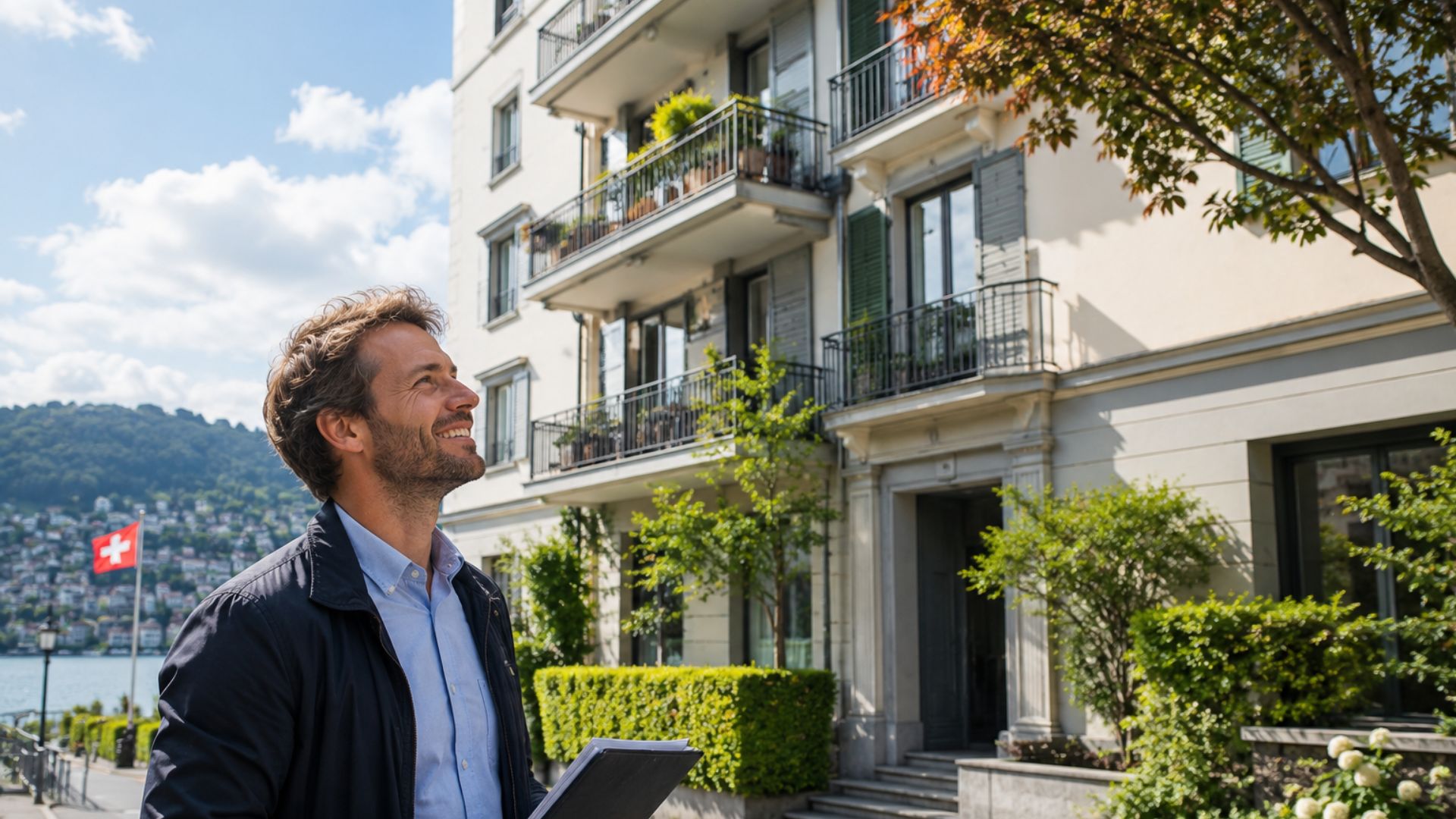
Buying an investment property is not simply about achieving a high rental yield. You should also focus on the property’s potential to increase in value over the years. Before making an investment decision, you should assess:
- the attractiveness of its location and the area’s development prospects;
- the technical and financial characteristics of the investment property;
- opportunities to increase its value through renovation or more efficient management.
Why is value appreciation potential a key criterion when investing in property?
First of all, it is important to understand that the purchase price of a property does not always reflect its true long-term value. A property that appreciates over the years not only helps you build stronger assets, but can also improve the overall return on your investment.
The Swiss property market has demonstrated remarkable stability. According to the latest data from the Swiss Federal Statistical Office (FSO), residential property prices rose by a further 4.6% in 2025, illustrating the resilience of the sector despite a sometimes uncertain economic environment.
This trend is a reminder that property investment is not limited to rental income. Two properties offering a similar yield today may have very different prospects over the medium and long term.
With an investment property offering strong appreciation potential, you can benefit from:
- a gradual increase in the property’s value;
- better resale prospects;
- opportunities to increase rental income following improvements;
- greater resilience to market fluctuations.
The aim is therefore not simply to purchase a profitable property, but to invest in an asset capable of increasing in value over time.
Criteria that indicate strong appreciation potential
Location
While a building can be renovated or converted, its location can never be changed. When assessing an area, you should therefore pay particular attention to several indicators:
- proximity to public transport;
- access to shops, schools and services;
- the economic dynamism of the municipality;
- urban development projects approved by the local authorities;
- local demographic trends;
- rental demand.
A neighbourhood benefiting from new infrastructure, the arrival of businesses or improved transport connections often offers above-average appreciation potential.
La Praille: an example of successful urban transformation
Take La Praille in Geneva (Praille Acacias Vernets, PAV project) as an example. This area has been undergoing major urban transformation for several years, with a large-scale project to convert a former industrial zone into a mixed-use neighbourhood. Specifically, Geneva is planning:
- the construction of new housing, eventually amounting to several thousand homes;
- the development of offices and business activities;
- the creation of public infrastructure and green spaces;
- improved transport connections with Geneva city centre.
In this type of area, an older property located nearby may become significantly more attractive, not because the building itself has changed, but because its surroundings have become much more desirable.
The property’s intrinsic characteristics
The overall condition of the building directly affects both its current value and its potential for future appreciation. Beyond its appearance, you should carefully assess:
- the quality of the load-bearing structure;
- the condition of the roof and façade;
- technical installations (heating, electricity and plumbing);
- energy efficiency;
- the quality of the insulation;
- the maintenance of common areas by the property management company.
The layout of the apartments is also a key factor. Well-designed, bright apartments that meet the current expectations of tenants generally remain more attractive over time.
Additional spaces and amenities can also increase a property’s value, such as parking spaces, storage units or bicycle rooms.
The property’s development potential
A property with strong potential does not necessarily have to be in good condition when you purchase it. You may need to carry out significant but potentially profitable improvements:
- renovate the apartments to improve comfort;
- modernise the common areas;
- improve the building’s energy efficiency;
- reconfigure certain spaces;
- create additional living space where permitted by municipal regulations following the required planning approval process.
These improvements can increase the property’s attractiveness, enhance its long-term value and, in some cases, allow rents to be gradually increased in compliance with Swiss tenancy law.
However, the property’s development potential should always be assessed in light of municipal planning regulations, any heritage protection restrictions and the overall cost of the work.
How can you confirm a property’s potential before investing?
Have you found a property that interests you? Great! The next step is to confirm its appreciation potential by combining market data, technical analysis and financial projections.
1. Analyse the local property market
The economic and property market environment largely determines how a property is likely to develop in the future. To avoid an inaccurate assessment of the market, it is important to cross-check data from reliable sources.
The main factors to analyse include:
- property price trends over the past 5 to 10 years;
- the residential vacancy rate;
- population growth;
- local economic activity;
- public and private development projects approved by cantonal and municipal authorities.
This information can be obtained from several sources:
- cantonal statistical offices and the Swiss Federal Statistical Office (FSO) for macroeconomic and statistical data;
- municipal planning departments for information on local development projects;
- property management companies and real estate managers, which have detailed knowledge of vacancy rates and local rental levels;
- notaries and real estate agents, who directly observe property transaction trends.
A structurally growing market is generally characterised by sustained rental demand and a steady increase in property values, while a stable or declining market offers more limited prospects for appreciation.
2. Carry out a technical audit of the property
The next step is to assess the building in order to measure the gap between its apparent value and the actual cost of upgrading it. Call on a specialised company to assess:
- the structural condition of the building;
- the roof, façade and building envelope;
- technical installations (heating, electricity and plumbing);
- overall energy efficiency;
- any mandatory upgrades required to meet current standards;
- an estimate of the work required in the short and medium term.
The professionals you may need to consult include:
- an architect to assess potential alterations and regulatory constraints;
- a civil engineer to assess the building’s structure and stability;
- a general contractor or renovation company to estimate the cost of the work;
- an energy expert (or CECB/GEAK expert in Switzerland) to assess energy performance and future requirements.
This audit helps turn an initial impression into a reliable budget estimate and avoids the common mistake of underestimating renovation costs.
3. Assess the property’s financial potential
The future profitability of the investment should be simulated using several realistic scenarios. This step allows you to determine whether your investment project is financially sound by examining the following criteria:
- gross and net yield after renovation;
- total cost of the investment;
- potential rental income based on the local market;
- operating and management costs;
- cash flow potential;
- potential resale value in the medium term.
At this stage, you can consult a property financing advisor or bank to structure your mortgage, a fiduciary firm specialising in Swiss real estate for tax matters, and a real estate agent to estimate the property’s potential resale value and marketability.
FAQ
Which renovations increase a property’s value the most?
Energy-efficient renovations, modernising the apartments, renovating the roof or façade, and improving common areas are among the investments most likely to increase a property’s value. However, the improvements should always be tailored to the local market to ensure a good return on investment.
How can you assess the potential of a neighbourhood in Switzerland?
The analysis should be based on several indicators: demographic trends, urban development projects, improvements to public transport, the arrival of new shops or businesses, and the level of rental demand. Statistics published by the Swiss Federal Statistical Office (FSO) and the cantons are valuable sources of information.
Can an older property offer good appreciation potential?
An older property can represent an excellent opportunity if it is located in a sought-after area and its structure is in good condition. Well-targeted renovation work can increase its attractiveness, reduce operating costs and gradually increase its value.