
Tax benefits of buying property
Buying a property offers several tax benefits that can reduce your tax burden, particularly through deductions for mortgage interest, maintenance costs and certain energy-efficiency investments.
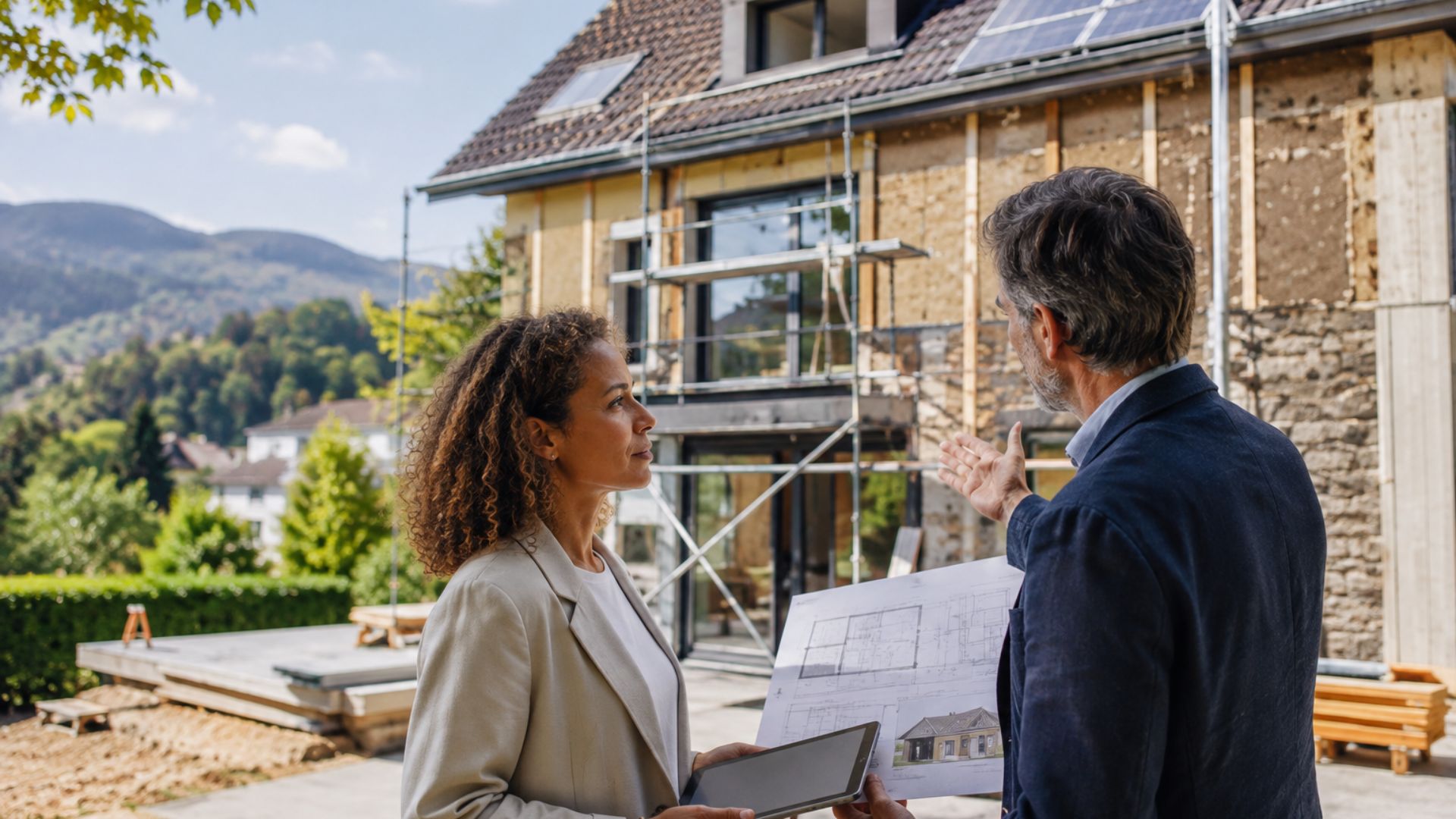
Buying a home is not only an investment in your assets. Depending on the homeowner’s situation, purchasing property can also help optimise your tax position through several deductions:
- Mortgage interest is generally deductible from taxable income, reducing the tax burden for as long as the mortgage remains outstanding.
- Maintenance expenses may be deductible under certain conditions when they are incurred to preserve the value of the property.
- Improvements to the property’s energy efficiency may also qualify for tax benefits while reducing the property’s running costs.
What are the main tax benefits of buying property?
Contrary to a common misconception, the favourable tax treatment of property ownership does not result directly from the purchase itself, but rather from the expenses associated with owning the property. The main tax benefits include:
- the deduction of mortgage interest;
- the deduction of maintenance costs;
- certain energy-efficient renovation measures;
- pension contributions when used to finance a home;
- in some cantons, additional tax measures for first-time buyers or renovation projects.
These rules may vary from one canton to another. You should therefore check the provisions that apply in the canton where the property is located.
Deducting mortgage interest
In most cases, interest paid on a mortgage can be deducted from taxable income.
This deduction is generally one of the main tax benefits associated with property ownership. The higher the interest paid, the greater the deductible amount, although the actual tax benefit naturally depends on the homeowner’s tax rate.
However, only the interest is deductible. Repayment of the mortgage principal cannot be deducted.
Why is this deduction important?
This rule helps reduce the tax cost associated with mortgage debt. It is also one of the reasons why many homeowners choose to retain part of their mortgage rather than repay it in full.
However, this strategy should always be assessed in light of current interest rates, the potential return on available capital and the buyer’s personal financial situation.
Deducting home maintenance costs
Expenses incurred to maintain the property in its original condition and preserve its value can reduce taxable income. Tax authorities generally recognise the following types of work as maintenance expenses:
- roof repairs and façade maintenance;
- replacement of a boiler or defective technical installations;
- painting and interior repairs.
Please note that tax authorities make a clear distinction between these value-preserving maintenance expenses and improvements that increase the property’s value, which are considered capital improvements.
Taking advantage of tax benefits for energy-efficient renovations
Unlike other investments that increase a property’s value, certain energy-efficient improvements remain fully deductible from taxable income. These include:
- insulating walls, floors or the roof;
- replacing old windows;
- installing solar panels;
- installing a heat pump.
In addition to the tax benefits, these investments generally help reduce energy costs and increase the value of the property.
In some cases, when the renovation costs are substantial, it may even be possible to spread certain deductions over several tax periods, in accordance with the applicable rules.
Financing your home through pension assets
Under certain conditions, the Swiss pension system allows you to use the second pillar (occupational pension) and the third pillar (Pillar 3a tied private pension savings) to finance the purchase of a primary residence:
- Early withdrawal of pension assets: This option allows you to withdraw funds directly from the capital accumulated in your second or third pillar. The amount withdrawn is immediately subject to tax at a reduced rate. In return, it reduces the amount of bank financing required.
- Pledging pension assets: With this option, your pension assets are pledged to the financing institution without triggering immediate taxation. It often allows you to preserve your retirement benefits and insurance coverage while making it easier to obtain financing.
The choice between these two options depends in particular on the borrower’s age, financial affordability and long-term financial objectives.
Taking the imputed rental value into account for tax purposes
The imputed rental value is a theoretical income amount added to the taxable income of homeowners who live in their own property. This system is intended to ensure a certain degree of equal tax treatment between homeowners and tenants. In return, homeowners can generally deduct:
- mortgage interest;
- maintenance costs;
- certain energy-related expenses.
The actual impact on your tax burden therefore depends on the balance between these different factors.
For example, a taxpayer is assessed an imputed rental value of CHF 18,000, which is added to their income. If they pay CHF 12,000 in mortgage interest and incur CHF 4,000 in maintenance costs, their total deductions amount to CHF 16,000. The net increase in their taxable income is therefore limited to CHF 2,000.
Please note: these rules will change from 2029
The vote held on 28 September 2025 approved the abolition of the imputed rental value, with the new system due to come into force on 1 January 2029. The main principles of the reform have now been established. However, the cantons have a transitional period in which to adapt their legislation and define the implementation details that fall within their jurisdiction.
In the future, taxation of the imputed rental value will be abolished. However, deductions for mortgage interest and standard maintenance costs will also be eliminated, except for a limited scheme for first-time buyers. The rules described above therefore remain applicable until then.
FAQ
Which expenses are tax-deductible when buying a property?
The property purchase itself does not qualify for a specific tax deduction. However, mortgage interest, maintenance costs and certain energy-efficiency improvements may be deductible under the applicable tax rules.
Is mortgage interest always tax-deductible?
As a general rule, yes. Interest paid on a mortgage can be deducted from taxable income, subject to the provisions of the applicable tax legislation.
Are all renovation costs tax-deductible?
No. Maintenance work intended to preserve the value of the property is generally deductible. Improvements that increase the property’s value are generally not immediately deductible from taxable income.
Can you benefit from tax advantages when carrying out energy-efficient renovations?
Yes. Many expenses aimed at improving a building’s energy efficiency benefit from favourable tax treatment, in addition to reducing energy consumption.
Are tax rules the same in every canton?
No. Depending on the canton, there may be differences regarding:
- certain tax deductions;
- specific rules for renovation work;
- regulations governing real estate capital gains tax;
- incentive schemes for energy-efficient renovations and the energy transition.
Before purchasing a property, it is therefore advisable to carry out a tax simulation to estimate the overall cost of homeownership as accurately as possible.