
Tips to reduce your heating consumption
By adopting a few simple actions such as slightly lowering the temperature, airing effectively, improving insulation and maintaining your installations, it is possible to keep a comfortable home while clearly reducing your heating consumption.
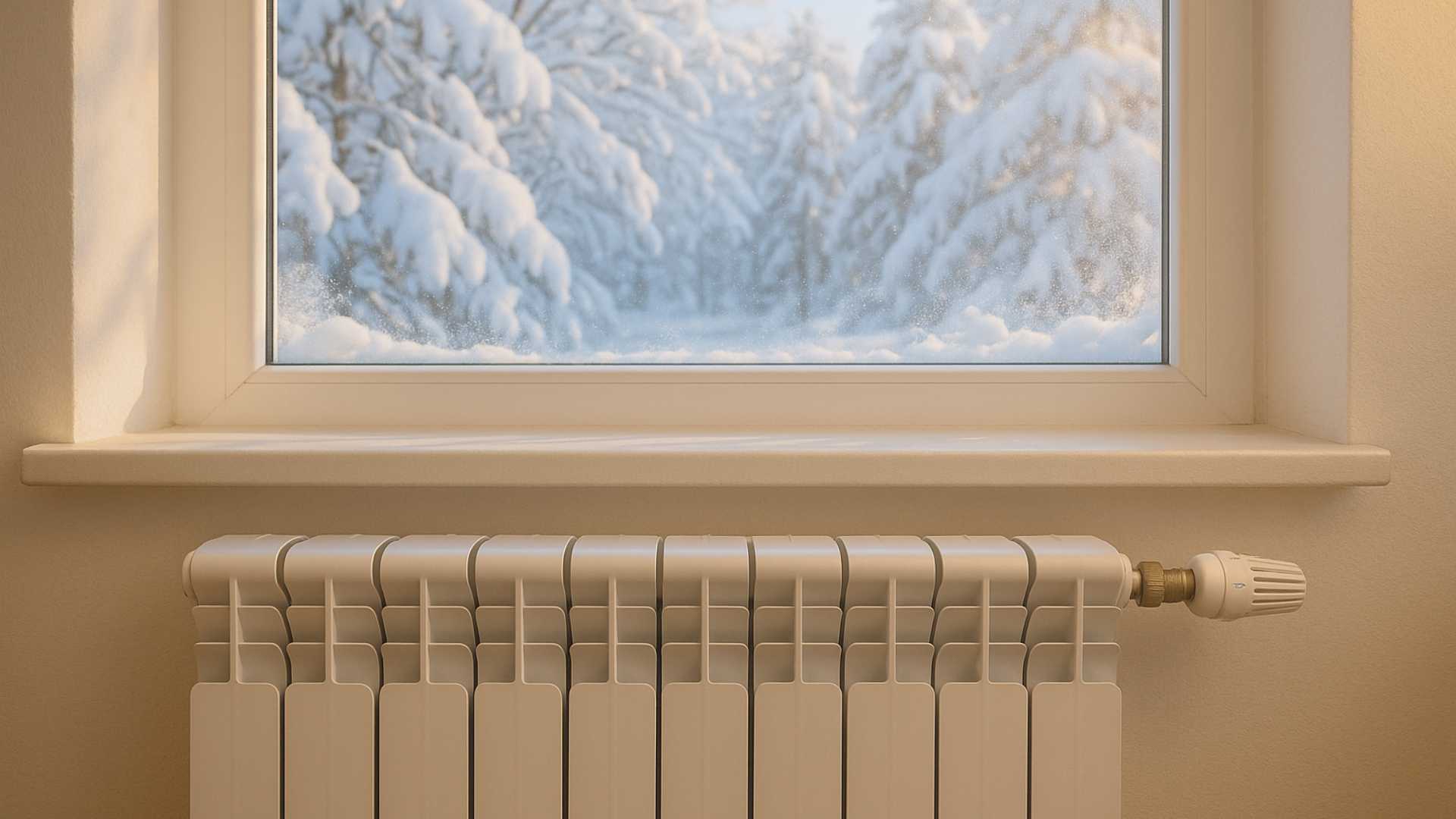
Our advice helps you keep a comfortable home in winter while reducing your heating expenses.
1. Reduce the temperature by one degree
Many rooms are heated unnecessarily. Reducing the ambient temperature by only one degree allows you to save about 5 to 6 percent of energy. The recommended temperatures are:
- 20 to 23 °C in the living room
- 17 to 20 °C in the bedroom
A programmable thermostat makes adjustment easier and automatically lowers the temperature during the night. If there is already one, there is no need to set it to the maximum.
As an example, in a detached house of 150 square meters consuming about 22 500 kilowatt hours per year, one degree less represents a saving of about 1 350 kilowatt hours per year. The financial gain then depends on the price per kilowatt hour of your heating system. And to compensate for this degree of difference, it is often enough to put on a warm wool sweater.
2. Air out quickly and at the right moment
In winter, the indoor air becomes dry because of the heating. To renew it without wasting energy, it is better to open the windows fully for a few minutes rather than leave them slightly open for a long time.
A window left slightly open continuously cools the air and the walls, which causes a lasting decrease in the indoor temperature and promotes condensation and therefore the risk of mould. Conversely, a fully open window ensures a quick renewal of air. Ideally, open two windows located on opposite sides to create a draft.
We recommend airing widely 2 to 3 times per day depending on the season:
- October: 12 to 15 minutes
- November: 8 to 10 minutes
- December to February: 4 to 6 minutes
This way of airing helps avoid humidity, improve air quality and limit heat losses.
3. Improve the insulation of your house
During a complete renovation, one can reinforce insulation by adding an insulating layer, installing triple glazing, a controlled ventilation system or even a heat pump instead of an oil boiler.
But it is not necessary to undertake major work to improve insulation on a daily basis. Simple actions are already effective:
- Close the shutters in the evening to keep the heat.
- Use thick curtains, which add a natural insulating layer.
These solutions reduce heat losses and improve indoor comfort without significant investment.
4. Clear the radiators for better heat distribution
When furniture or curtains block the radiators, the heat does not distribute properly. Result: cold areas appear and up to 15 percent of the produced heat can be lost. A suitable interior layout therefore helps reduce heating costs while improving comfort.
Avoiding obstacles in front of heat sources also helps prevent cold walls and the appearance of mould. Indeed, humidity settles more easily on cold surfaces, whether walls or furniture.
If a sofa or an armchair placed against a north wall gives off a musty smell, the wall is probably too humid. To reduce this risk, leave at least 5 centimetres of space between the furniture and the cold walls.
Finally, in large rooms that are very furnished, the circulation of warm air may be insufficient. In this case, adding a small additional heat source can be useful to equalize the temperature.
5. Keep a minimum temperature during absences
In winter, it is not recommended to turn off the heating completely, even if it may seem economical. Indeed, the air, the walls and the furniture cool down, which then requires much more energy to heat everything up again.
It is preferable to maintain a minimum temperature of about 18 °C, enough to limit consumption while avoiding temperature variations that are too large, which encourage the appearance of mould. A stable temperature in all rooms thus protects the home and preserves comfort when you return.
6. Maintain the chimney regularly
If you have a chimney, it is a good alternative or a complement to classic heating. However, it is essential to ensure that it is clean and in good condition: a dirty chimney reduces heat distribution and can even present safety risks. Regular maintenance allows better combustion, more effective heat and optimal spreading throughout the house.
Conclusion
By applying a few simple actions such as slightly reducing the temperature, airing properly and improving insulation, it is possible to reduce heating consumption significantly. A suitable interior layout and a constant temperature help limit heat losses and avoid humidity. Finally, regular maintenance of the installations ensures better distributed heat and lasting comfort throughout the winter.
Sources
hoval.ch - Article
vaillant.ch - Article
quechoisir.org - Article
sid.delemont.ch - Article